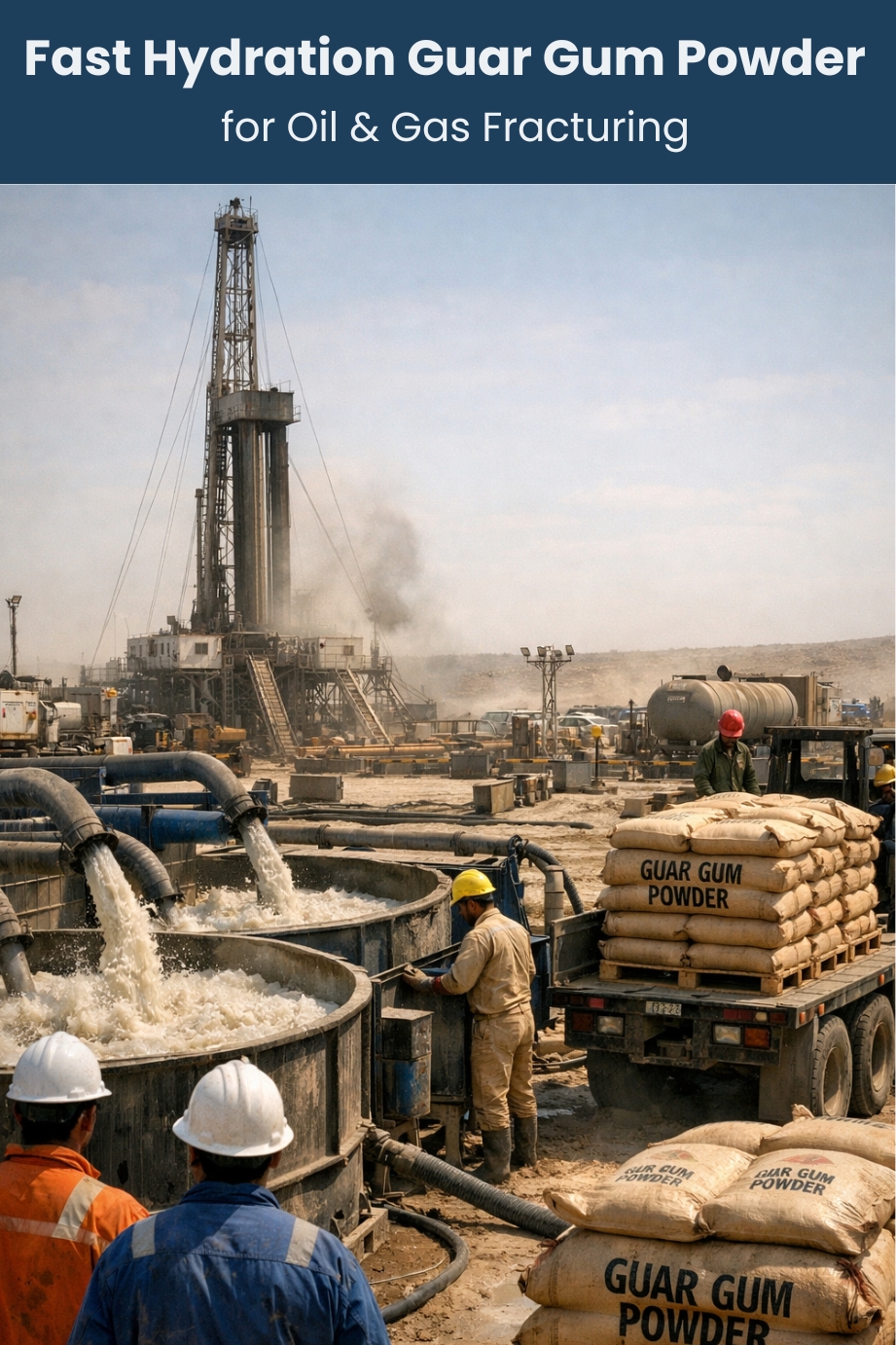
About Ajit Patel

CEO, Altrafine Gums With over Four decades of expertise in the natural gums and hydrocolloids industry, Ajit Patel leads Altrafine Gums, a globally recognized manufacturer and exporter of Guar Gum Powder, Cassia Tora Powder (Cassia Gum Powder) and other Hydrocolloids. Under his visionary leadership, the company has built a strong reputation for quality, innovation, and reliability across the food, feed, pet feed, pharmaceutical, mining, oil drilling and cosmetic sectors. Altrafine Gums has been serving global industries for decades with a focus on sustainable sourcing, research-driven production, and stringent quality control. Its wide product portfolio includes Guar Gum Powder, Cassia Tora Powder (Cassia Gum Powder) and other plant-based hydrocolloids that serve as key functional ingredients in diverse applications. Ajit Patel’s commitment to excellence ensures that every product from Altrafine meets international standards of performance and purity. He is passionate about advancing the global reach of Indian hydrocolloids, fostering customer trust, and promoting eco-friendly, science-backed solutions that enhance product formulation and performance worldwide.

AI Summary

Cassia gum – commercially available as cassia gum powder, cassia tora powder and refined cassia gum powder (E427) – is rapidly gaining traction across Central and Eastern European food markets. From Poland’s expanding bakery sector to Hungary’s confectionery industry, from Ukraine’s processed food landscape to Bulgaria’s natural additives push and from the Czech Republic’s snack food innovations to Serbia’s burgeoning organic sector, cassia gum manufacturers and cassia tora suppliers are witnessing unprecedented demand. This article explores the regional dynamics driving adoption, highlights key cassia tora uses across product categories and outlines why food technologists are choosing cassia powder as a cost-effective, clean-label solution. Whether you’re sourcing e427 cassia gum powder for industrial application or evaluating the broader cassia gum market, this comprehensive guide covers every angle.

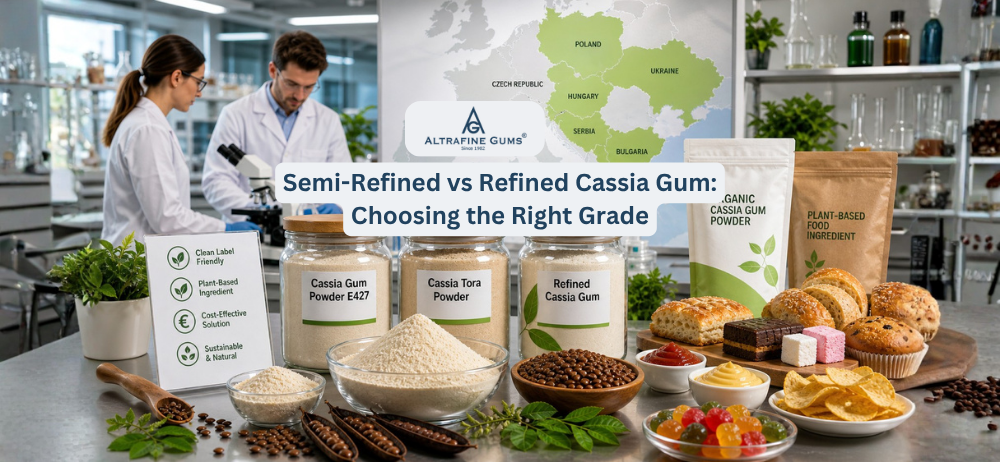
Semi-Refined vs. Refined Cassia Gum: Key Differences and When to Use Each

The global hydrocolloid industry has long relied on a diverse toolkit of natural gums, starches and plant-based stabilizers. Among the newer entrants making a strong impression is cassia gum – derived from the endosperm of Sennaobtusifolia seeds – which has earned its place alongside xanthan, guar and locust bean gum in the formulator’s arsenal. Yet not all grades are created equal and understanding the distinction between semi-refined and refined cassia gum powder is essential before deployment.

Semi-refined cassia gum retains more of its natural seed-coat proteins and pigments, making it suitable for applications where cost efficiency and moderate viscosity are priorities. It is commonly used in pet food, industrial paper coating and some meat applications. Refined cassia gum powder, by contrast, undergoes extensive purification to remove husks and impurities, resulting in a whiter, odour-neutral powder with significantly higher gel strength when combined with kappa-carrageenan or xanthan gum. This refined form – also designated as cassia gum powder e427 or e427 cassia gum powder under EU food additive regulations – is approved for direct use in human food products.

The regulatory designation matters enormously in European markets. Cassia gum e427 is listed as a permitted food additive under Regulation (EC) No 231/2012, with specific maximum levels set for various food categories. Food manufacturers sourcing cassia powder for human consumption must therefore work with suppliers who can guarantee the refined grade with appropriate documentation. Reputable cassia gum manufacturers provide full specification sheets, Certificates of Analysis and EU compliance paperwork as standard – a non-negotiable requirement for procurement teams in any European country.

When to choose which grade? Semi-refined suits applications where the gum is not directly ingested by humans and where cost reduction is paramount. Refined cassia gum powder is the default choice for bakery fillings, dairy products, processed meats and confectionery. The choice also depends on synergistic blending: refined cassia tora powder forms particularly robust gels with kappa-carrageenan at concentrations as low as 0.1–0.3%, making it highly economical relative to alternatives. This gel-forming synergy is one of the primary reasons cassia gum market growth has outpaced many competing hydrocolloids over the past decade.

Need Industrial Cassia Gum?
Email EMAIL US NOW

Cassia Gum’s Growing Role in the Polish Food Processing Industry

Poland is one of Central Europe’s most dynamic food manufacturing hubs, with a bakery and dairy sector that exports to over 50 countries. The country’s food technologists have been increasingly turning to cassia gum powder as a multifunctional ingredient that addresses key formulation challenges: moisture retention in long-shelf-life breads, syneresis control in yoghurts and fresh cheeses and binding efficiency in processed meat applications.

In bakery specifically, cassia tora powder blended with hydroxypropyl methylcellulose (HPMC) or guar gum has shown excellent results in reducing staling rates and improving crumb texture in packaged rye and wheat breads. Polish bakeries producing for supermarket chains require consistent performance batch after batch – a quality that refined cassia gum powder, sourced from reliable cassia tora suppliers, readily delivers. The gum’s ability to hold water during baking without releasing it excessively upon cooling is particularly valued in high-hydration sourdough-style products.

The processed meats sector – a cornerstone of Polish food exports – uses cassia powder primarily as a binder and moisture-retention agent in cooked hams, frankfurters and pâtés. When used in combination with carrageenan, e427 cassia gum powder creates a firm, sliceable texture while significantly reducing fat content, aligning with consumer trends toward leaner products. Polish meat processors have noted reductions in total hydrocolloid usage of up to 15% after switching to cassia-carrageenan blends, delivering meaningful cost savings without quality compromise.

Our Other Product

Guar Gum Powder

The Rise of Cassia Gum in the Hungarian Confectionery Market

Hungary has a storied tradition in confectionery, from artisanal chocolate to hard-boiled candies and gummy sweets. As the country’s confectionery manufacturers modernise their formulations for cleaner labels and longer shelf lives, cassia gum powder is emerging as a go-to ingredient for texture engineering at competitive cost points.

Gummy confectionery presents some of the most demanding rheological challenges in food production: the gel must set quickly, resist syneresis during storage, maintain elasticity across a range of temperatures and deliver a clean mouthfeel. Cassia tora powder, when blended with kappa-carrageenan, achieves all of these requirements at dosage levels that are considerably lower – and therefore more economical – than gelatin or pectin-only systems. Hungarian confectionery manufacturers sourcing from established cassia gum manufacturers have reported improved production line efficiency due to faster gel setting times.
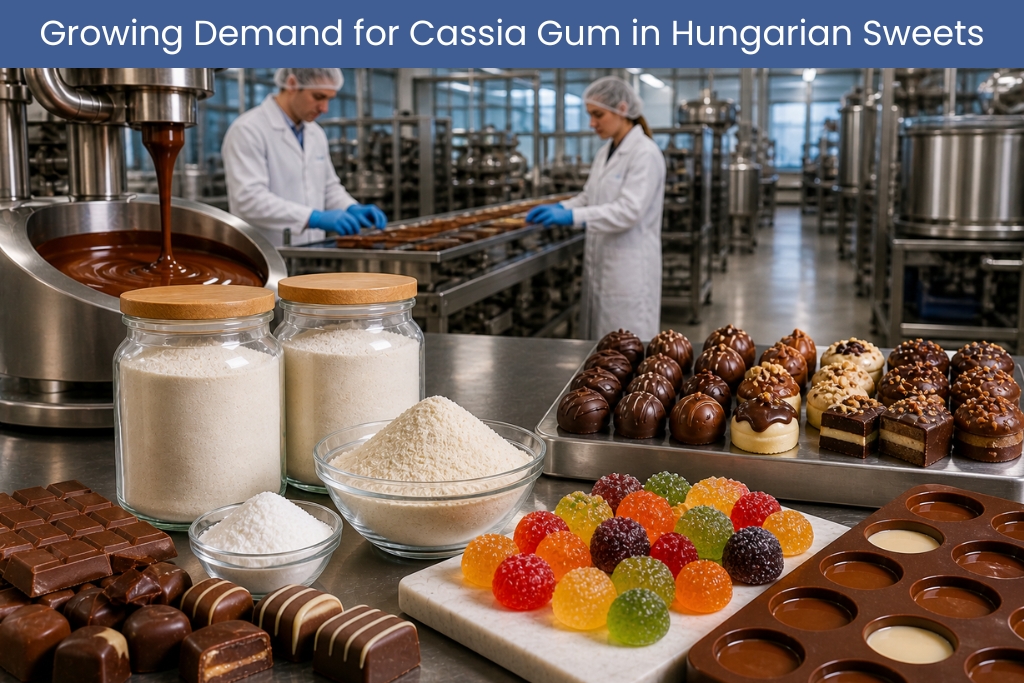
Growing Demand for Cassia Gum in Hungarian Sweets

Beyond gummies, cassia powder finds utility in cream fillings, praline coatings and chocolate ganaches where controlled viscosity and temperature stability are needed. The refined grade’s neutral taste profile ensures that it does not interfere with delicate flavour systems – a crucial consideration when working with high-cocoa-content products. The growing cassia gum market in Hungary is further supported by the ingredient’s EU approval status, removing any regulatory hurdles for domestic and export sales alike.

The Potential of Cassia Gum in the Ukrainian Processed Foods Market

Ukraine’s food processing industry, despite significant structural challenges in recent years, is demonstrating remarkable resilience and a forward-looking orientation toward natural, plant-based ingredients. Consumer demand for clean-label products with recognisable ingredient lists has grown substantially, creating an opening for cassia gum powder as a natural stabilizer and thickener in categories ranging from soups and sauces to dairy-based beverages.

Cassia tora uses in Ukraine’s processed food sector are particularly prominent in retort and shelf-stable products, where the gum’s heat stability is a major advantage. Unlike some hydrocolloids that degrade under high-temperature processing, cassia powder maintains its viscosity-building properties through pasteurisation and sterilisation cycles. This makes it ideal for tomato-based sauces, ready meals and canned soups – categories that form a significant portion of Ukrainian retail food sales.

Ukrainian food manufacturers are also exploring cassia gum blends in fermented dairy products such as kefir and drinkable yoghurt, where its synergistic interaction with carrageenan prevents whey separation without making the product overly viscous. As cassia tora suppliers expand their distribution networks into Eastern Europe, Ukrainian buyers benefit from more competitive pricing and improved supply chain reliability, accelerating adoption across mid-sized food processing companies.

Cassia Gum’s Impact on Bulgaria’s Natural Food Additives Market

Bulgaria is experiencing a notable shift in its food additive procurement patterns, driven by consumer pressure for natural, plant-derived ingredients and by EU-wide harmonisation of food safety standards. In this context, cassia gum – positioned at the intersection of natural origin and technological functionality – is gaining significant ground in the Bulgarian market.

Bulgarian food manufacturers, particularly in the dairy and functional food segments, have been replacing synthetic emulsifiers and stabilizers with natural alternatives wherever technically feasible. Refined cassia gum powder fits this requirement precisely: it is derived from a leguminous plant, carries no artificial processing residues and is approved under EU additive regulations as e427 cassia gum powder. Its plant-based origin resonates strongly with Bulgarian consumers who increasingly scrutinise product labels.

The cassia gum market in Bulgaria is also being shaped by the country’s growing export orientation. Bulgarian food exporters targeting Western European markets must comply with demanding retailer specifications that often favour clean-label ingredients. Cassia powder, sourced from reputable cassia gum manufacturers with full traceability documentation, helps Bulgarian producers meet these requirements while maintaining cost competitiveness. Trade fairs and ingredient distributor networks have played a key role in educating Bulgarian food technologists about the full range of cassia tora uses available to them.

Cassia Gum in the Czech Republic: Boosting Quality in Processed Foods

The Czech Republic’s food processing industry is characterised by sophisticated technical standards, a strong export culture and a consumer base with high quality expectations. It is therefore unsurprising that Czech food manufacturers have been among the more technically engaged adopters of cassia gum powder in the region, applying it systematically across bakery and snack food categories.

In bakery, Czech producers of packaged pastries, filled doughnuts and layered cakes have found that cassia tora powder significantly extends moisture retention and reduces the need for artificial humectants. This aligns with Czech consumer preferences for shorter, more recognisable ingredient lists. The gum’s compatibility with fat-reduced formulations is particularly valued as manufacturers respond to health-conscious demand by reducing butter and oil content without sacrificing mouthfeel.
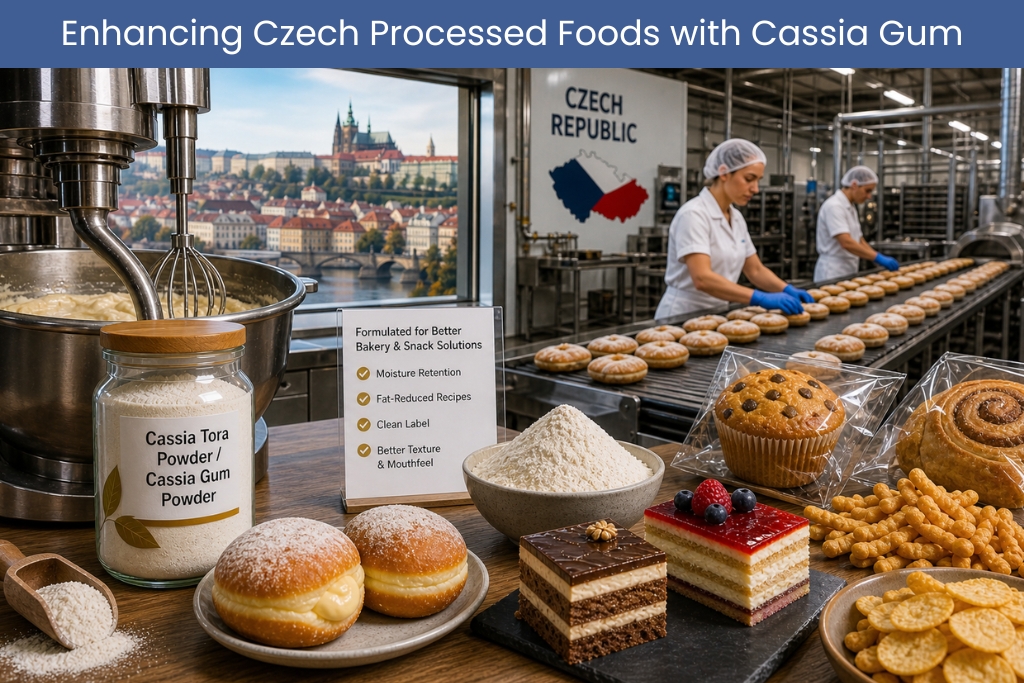
Enhancing Czech Processed Foods with Cassia Gum

The snack food sector – encompassing extruded snacks, flavoured crackers and popcorn coatings – uses cassia powder as a film-forming and adhesion agent for seasoning blends. When properly dispersed in a coating slurry, refined cassia gum powder creates a uniform, adhesive surface that improves seasoning retention and reduces dust-off during packaging. Czech snack producers working with cassia tora suppliers have reported flavour cost savings as a direct result of improved seasoning transfer efficiency. The broader cassia gum market in the Czech Republic continues to expand as awareness of these performance benefits grows.

The Future of Cassia Gum in Serbia’s Food & Health Sector

Serbia is an emerging market for both organic food production and health-oriented processed foods, with a growing community of entrepreneurs and established companies seeking natural ingredient solutions. Cassia gum is increasingly being positioned within this narrative – not merely as a technical ingredient, but as a marker of product naturalness that resonates with health-conscious Serbian consumers.

The Serbian organic food market, though smaller than its Western European counterparts, is growing at double-digit annual rates. Within this segment, cassia gum powder is being evaluated for use in organic-certified bakery products, plant-based dairy alternatives and health-supplement beverages. Its natural plant origin, combined with its robust functional profile, makes it one of the few hydrocolloids that can simultaneously meet clean-label organic and technical performance requirements.

Cassia tora uses in Serbia are also expanding in the health food channel, where functional beverages, protein shakes and meal replacement products require stable suspension and smooth texture. Cassia powder at low usage levels (0.05–0.15%) can prevent sedimentation and improve pourability in plant-protein beverages without contributing excessive viscosity. As Serbian cassia gum manufacturers and importers build stronger supply relationships, the ingredient’s availability and affordability are expected to improve further, catalysing wider adoption across the food and health sector.

Buy Cassia Gum Direct from Manufacturer
call Call Now

Conclusion

The trajectory of cassia gum across Poland, Hungary, Ukraine, Bulgaria, the Czech Republic and Serbia tells a coherent story: a technically versatile, plant-derived hydrocolloid is steadily displacing less sustainable and more costly alternatives across Central and Eastern Europe’s food processing landscape. Whether deployed as refined cassia gum powder in human food applications under the e427 designation or as semi-refined cassia tora powder in industrial contexts, the ingredient’s combination of functional breadth, regulatory acceptance and supply-chain maturity makes it a compelling choice.

For procurement teams, the key takeaway is to engage with established cassia gum manufacturers who can provide consistent quality, full regulatory documentation and technical support for formulation optimisation. For food technologists, the breadth of cassia tora uses – from gel formation and moisture retention to suspension stabilisation and seasoning adhesion – represents a genuine opportunity to improve product quality while meeting the clean-label demands of today’s European consumers. The cassia gum market across these six countries is still maturing, meaning early movers stand to gain the most from the ingredient’s expanding commercial potential.

FAQs

What is the difference between cassia gum powder and cassia tora powder?

Cassia tora powder refers broadly to powder from Sennaobtusifolia seeds, while cassia gum powder specifically denotes the purified endosperm extract used as a food-grade hydrocolloid.

Is e427 cassia gum powder safe for use in European food products?

Yes - cassia gum powder e427 is an EU-approved food additive under Regulation (EC) No 231/2012, with defined maximum levels for specific food categories.

What are the main cassia tora uses in food manufacturing?

Key cassia tora uses include gelling and texture improvement in confectionery, moisture retention in bakery, stabilisation in dairy products and binding in processed meats.

How do I select reliable cassia tora suppliers for European markets?

Choose cassia tora suppliers who provide Certificates of Analysis, EU compliance documentation, consistent refined-grade specifications and transparent supply chain traceability.

Why is the cassia gum market growing faster than some competing hydrocolloids?

Its synergistic gelling with carrageenan, clean-label plant origin, EU regulatory approval and competitive cost per unit of functionality drive above-average cassia gum market growth.

<< 1 >>


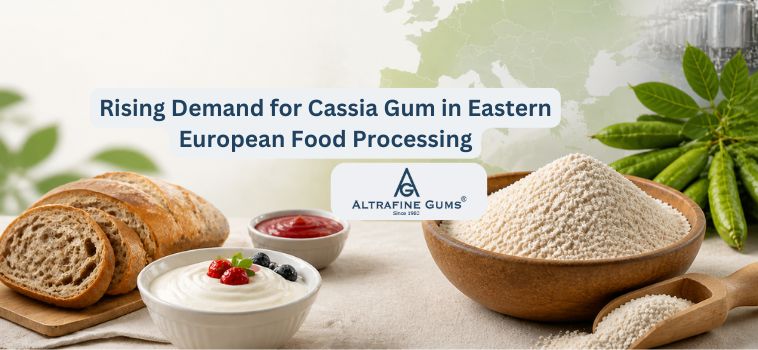
Rising Demand Cassia Gum Eastern European Food Processing

AI Summary

This article explores the rapidly expanding role of cassia gum and cassia gum powder in Eastern European food processing. From its functional advantages over other hydrocolloids to its sustainable sourcing credentials, cassia gum is gaining significant momentum across Poland, Hungary, Romania and beyond. The piece covers health trends, market drivers, competitive comparisons and future growth opportunities – offering a comprehensive view of why cassia tora suppliers and cassia gum manufacturers are increasingly focusing on this dynamic region.

The Growing Demand for Cassia Gum Powder in Eastern Europe’s Food Industry

Eastern Europe’s food processing sector is undergoing a quiet but consequential transformation. As manufacturers across the region seek cleaner, more functional and cost-effective ingredients, cassia gum has emerged as one of the most compelling options in the hydrocolloid space. Derived from the endosperm of Senna obtusifolia seeds, cassia gum powder delivers powerful thickening and gelling properties that are finding increasing relevance in dairy products, meat processing, bakery applications and convenience foods.

The compound is approved under the European food additive designation E427 cassia gum powder (also referenced as cassia gum powder E427), giving it regulatory standing across EU member states in Eastern Europe. As regional processors look for reliable, approved alternatives to synthetic thickeners, the cassia gum market in this part of the world is seeing sustained year-on-year growth – a trend that shows no sign of slowing.

Need More Information?
Email Email Us Today!

Cassia Gum vs. Other Hydrocolloids in Eastern European Food Manufacturing

Hydrocolloids are the backbone of modern food texture engineering and Eastern European manufacturers have traditionally leaned on guar gum, xanthan gum and carrageenan to achieve desired consistencies in their products. However, refined cassia gum powder is carving out a distinctive position in this competitive landscape.

Unlike guar gum, which can impart a slightly beany aftertaste at higher concentrations, cassia gum is largely flavour-neutral – a meaningful advantage in delicate applications like flavoured dairy desserts or premium meat emulsions. When compared to xanthan gum, cassia tora powder offers superior gel formation when used in combination with carrageenan or locust bean gum, producing firmer, more stable textures at lower use levels. This synergistic gelling behaviour is particularly prized in the production of pet foods, processed meats and low-fat dairy alternatives – all categories seeing strong growth across Eastern Europe.

From a cost perspective, cassia powder also competes favourably. Eastern European food manufacturers operating on tighter margins find it appealing that cassia gum can replace more expensive hydrocolloids without sacrificing technical performance. The result is a compound that wins not just on functionality, but also on economics.

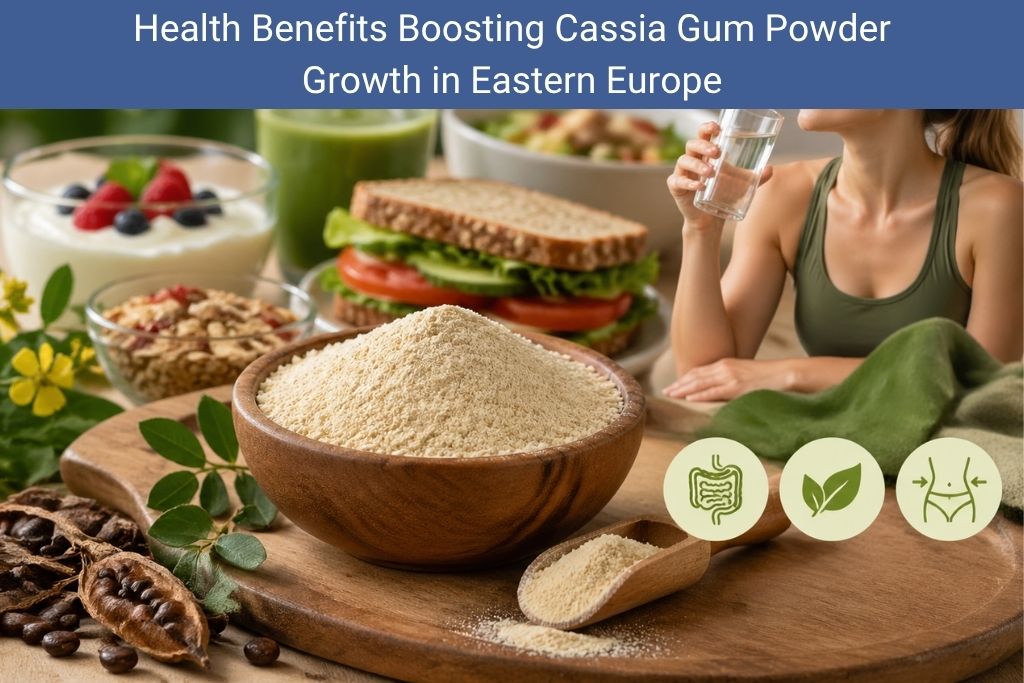
Health Benefits Driving the Growth of Cassia Gum Powder in Eastern European Food Products

One of the most powerful forces reshaping Eastern European food markets is the health-conscious consumer. Urban populations in Poland, the Czech Republic, Hungary and Romania are increasingly scrutinising ingredient labels – and the shift towards natural, plant-derived additives is clearly reflected in procurement strategies across the food industry.

Cassia gum powder aligns naturally with this demand. As a plant-based polysaccharide with dietary fibre properties, it supports digestive health and can contribute to reduced-fat and reduced-calorie formulations by improving mouthfeel and body without adding significant caloric load. Cassia tora uses extend into functional food development, where its prebiotic potential is attracting interest from manufacturers creating gut-health-oriented product lines.

Furthermore, growing consumer awareness around clean-label certification means that ingredients designated as natural and non-GMO carry a distinct marketing premium. Cassia gum fits this profile well and cassia powder uses are expanding accordingly into organic and health-positioned products – from plant-based dairy alternatives to fortified grain products.

Health Benefits Boosting Cassia Gum Powder Growth Eastern Europe

Sustainability and Cassia Gum Powder: A Growing Trend in Eastern European Food Processing

Sustainability has moved from a corporate talking point to a genuine procurement criterion across Eastern European food manufacturing. As EU environmental directives tighten and consumers hold brands to higher ecological standards, the sourcing story behind each ingredient matters more than ever.

Cassia (Senna obtusifolia) is a hardy, drought-tolerant crop primarily cultivated in India and parts of East Africa. Its cultivation requires relatively modest water and agrochemical inputs compared to many other hydrocolloid source crops. For manufacturers in the cassia gum market, this translates into a more defensible sustainability narrative – particularly important when pitching to major retail chains or export markets with stringent environmental compliance requirements.

Responsible cassia tora suppliers increasingly provide traceability documentation, third-party certifications and sustainability audit trails that allow Eastern European buyers to meet their own ESG reporting obligations. Cassia gum manufacturers who invest in ethical sourcing and processing transparency are finding particular favour with Polish, German-affiliated and Scandinavian-focused supply chains operating through Eastern European hubs.

Key Countries in Eastern Europe Adopting Cassia Gum Powder for Food Production

While the broader Eastern European region shows promising momentum, certain markets stand out for their pace of cassia gum adoption.

Poland, as the largest food processing economy in Central-Eastern Europe, is a natural leader. Its substantial dairy, meat and confectionery sectors provide broad scope for refined cassia gum powder applications. Polish manufacturers exporting to Western Europe must meet rigorous clean-label and functionality standards, making cassia gum an attractive ingredient upgrade.

Hungary has a well-established tradition in meat and paprika-based processed foods. Here, cassia gum powder is gaining traction as a binder and stabiliser in sausages and pâtés, where its neutral flavour and firm gel properties complement existing formulations without disrupting product identity.

Romania, with its rapidly modernising food processing industry and growing middle-class consumer base, represents one of the highest-growth opportunities in the region. Demand for convenience foods and functional dairy is accelerating and local manufacturers are actively sourcing from cassia tora suppliers to meet new product development briefs.

Other notable markets include the Czech Republic, Slovakia and the Baltic states, where EU regulatory alignment creates a favourable environment for ingredients already carrying E427 approval. In each of these markets, import relationships with Indian cassia gum manufacturers are becoming increasingly formalised.

The Future of Cassia Gum in Eastern European Food Processing: Trends and Opportunities

Looking ahead, several converging trends suggest that the cassia gum market in Eastern Europe is positioned for significant expansion.

The rise of plant-based and vegan food products across the region directly benefits cassia gum, as manufacturers require effective gelling agents free from animal-derived components. Similarly, the growth of functional foods – products designed to deliver measurable health outcomes – expands the relevance of cassia tora powder as a fibre-enriching ingredient.

Innovation in hybrid hydrocolloid systems is another frontier of opportunity. Formulators are discovering that blends of cassia gum with other approved gums produce textures unachievable with single-ingredient systems, opening new possibilities in premium segments like artisan cheese alternatives, plant-based meat analogues and structured desserts.

Finally, digital procurement and direct sourcing relationships are shortening supply chains between Eastern European manufacturers and Indian cassia gum manufacturers, reducing costs and improving ingredient traceability. As these commercial relationships mature, cassia powder uses will continue to diversify – potentially extending into nutraceutical, cosmetic and pharmaceutical applications adjacent to food processing.

Speak with an Expert
call Call Us Now!

Conclusion

Cassia gum’s rise in Eastern European food processing reflects the intersection of several powerful forces: the demand for clean-label functionality, cost efficiency, sustainability and health-positive ingredients. As refined cassia gum powder earns its place alongside more established hydrocolloids, the region’s manufacturers are discovering a versatile, well-regulated and commercially attractive ingredient. For cassia tora suppliers and manufacturers worldwide, Eastern Europe represents not just an emerging market – but a maturing one with real long-term depth.

Our Other Product

Guar Gum Powder

FAQs on Cassia Gum Powder

What is cassia gum powder used for in food processing?

Cassia gum powder is used as a thickening, gelling and stabilising agent across dairy, meat, bakery and convenience food applications in Eastern Europe and globally.

Is cassia gum powder E427 approved for use in European food products?

Yes, E427 cassia gum powder holds EU food additive approval, making it legally usable across all EU member states including Eastern European countries.

How does cassia tora powder differ from guar gum?

Cassia tora powder forms firmer gels, is flavour-neutral and performs synergistically with other gums, offering advantages over guar gum in several texture-critical applications.

Where can Eastern European manufacturers source refined cassia gum powder?

Most refined cassia gum powder is sourced from established cassia tora suppliers and cassia gum manufacturers based primarily in India, with increasing direct trade relationships to Eastern Europe.

Why is the cassia gum market growing in Eastern Europe specifically?

Clean-label trends, EU regulatory alignment, plant-based food growth and the push for sustainable ingredients are the primary drivers accelerating cassia gum adoption across the Eastern European food sector.

<< 1 >>


AI SUMMARY

Guar gum powder has emerged as an indispensable ingredient in Belgium’s world-renowned chocolate and confectionery industry. Sourced from the endosperm of the guar plant, this plant-based hydrocolloid functions as a powerful guar gum thickening agent and guar gum stabilizer, helping manufacturers achieve superior texture, consistent viscosity and extended shelf life. From artisan praline makers in Brussels to large-scale industrial chocolate producers in Antwerp, Belgian confectioners are increasingly turning to guar gum – supplied by trusted guar gum powder exporters and guar gum suppliers – as their go-to natural solution. This article explores guar gum’s multifaceted role in Belgian confectionery, its sustainability credentials, city-wise demand patterns and the future it promises in premium chocolate manufacturing.

Want to Discuss?
call Call Us Now!

The Role of Guar Gum Powder in Chocolate Production

Belgium has long held the title of the world’s finest chocolate producer, with its confectioners obsessing over every nuance of flavour, texture and finish. Behind those velvety ganaches and glossy couvertures lies a remarkable ingredient that rarely receives public recognition: guar gum powder. Derived from the seeds of the guar plant (Cyamopsis tetragonoloba), this natural polysaccharide has quietly become one of the most relied-upon functional ingredients in Belgian chocolate manufacturing.

In chocolate production, maintaining the correct viscosity is paramount. Too thick and the chocolate cannot be moulded or enrobed efficiently; too thin and the coating fails to adhere. Guar gum acts as a precision guar gum thickening agent, enabling chocolatiers to dial in the exact flow properties they need for everything from filled bonbons to chocolate-dipped biscuits. Even small concentrations – typically 0.1–0.5% by weight – deliver measurable improvements in consistency and mouthfeel.

Beyond viscosity, guar gum powder functions as a guar gum stabilizer that inhibits fat bloom and sugar bloom – two of the most common defects that cause chocolate surfaces to develop white, dusty patches. By retarding moisture migration and stabilising the fat crystal network, guar gum ensures that Belgian chocolates retain their signature snap and glossy appearance throughout their shelf life, a quality that both artisan producers and industrial-grade guar gum users demand equally.

Guar Gum’s Impact on Confectionery Products: Enhancing Quality and Texture

Understanding Industrial Importance Fast Hydration Guar Gum

The Belgian confectionery sector extends well beyond chocolate. Gummies, marshmallows, nougats, fondants and sugar-panned confections all populate supermarket shelves and specialist boutiques alike. Across this diverse landscape, guar gum plays a starring supporting role in product consistency and quality.

Key functional benefits include:

  • Texture uniformity: In gummies and jellies, guar gum creates a smooth, elastic bite free from graininess. It prevents syneresis – the weeping of liquid from a gel – keeping products moist without becoming sticky.
  • Shelf-life extension: As a guar gum stabilizer, it binds free moisture and slows staling, allowing confectionery products to maintain freshness for weeks longer than untreated formulations.
  • Creaminess in fillings: Praline and caramel fillings benefit from guar gum’s ability to build body without adding calories, making it attractive to health-conscious product reformulators.
  • Suspension of particulates: Nut pieces, cocoa nibs and fruit inclusions remain evenly distributed throughout moulded bars rather than sinking during processing.
  • Reduced production waste: Stable viscosity profiles lower the incidence of reject batches caused by inconsistent flow during depositing or enrobing lines.

Guar gum suppliers and guar gum powder exporters report steady year-on-year growth in Belgian confectionery orders, driven by manufacturers seeking cleaner labels alongside reliable functional performance.

Sustainability of Guar Gum Powder: A Natural Solution for the Confectionery Sector

Sustainability is no longer a marketing afterthought for Belgian confectioners – it is a core strategic pillar. The country’s chocolate industry has made binding commitments on cocoa sourcing, packaging reduction and ingredient traceability. Against this backdrop, guar gum powder stands out as one of the most environmentally responsible functional ingredients available.

Guar is cultivated primarily in the arid and semi-arid zones of Rajasthan, India, where it thrives on minimal water – a stark contrast to many competing hydrocolloids derived from seaweed or animal gelatin, which require energy-intensive harvesting and processing. The plant also fixes atmospheric nitrogen, enriching the soil and reducing the need for synthetic fertilisers. Post-harvest, seeds are milled to separate the germ and hull from the endosperm, producing guar gum powder through a largely mechanical process with minimal chemical inputs.

For Belgian manufacturers working toward ISO 14001 environmental management certification and EU Farm-to-Fork commitments, sourcing from a responsible guar gum powder manufacturer or certified guar gum exporter with transparent supply-chain documentation offers a credible, auditable claim of ingredient sustainability. Because such small quantities are effective, the overall carbon footprint per tonne of finished confectionery is genuinely minimal. In an era where Belgian consumers are reading labels with greater scrutiny and retailers are demanding shorter ingredient decks, guar gum powder’s status as a single-ingredient, plant-based, non-GMO additive gives it a significant commercial advantage over synthetic alternatives.

Why Belgium’s Chocolate Makers Prefer Guar Gum Powder

Several hydrocolloids compete in the Belgian food-ingredient market – xanthan gum, carrageenan, locust bean gum and modified starches among them. Yet guar gum consistently emerges as the preferred choice for chocolate and confectionery applications. The reasons are both technical and commercial.

From a technical standpoint, guar gum hydrates rapidly in cold water and achieves peak viscosity within minutes – a property that suits the fast-moving production lines of modern Belgian factories. Its compatibility with sucrose, glucose syrup, dairy fats and cocoa butter means it integrates smoothly into existing recipes without requiring reformulation of other components. Unlike some hydrocolloids, it does not contribute bitterness or off-notes at working concentrations.

Commercially, competitive guar gum price per kilogram is considerably lower than many functional alternatives, offering Belgian manufacturers genuine cost savings at scale. With global guar gum suppliers offering food-grade, pharmaceutical-grade and industrial grade guar gum variants, procurement teams can select the precise specification needed – food-grade for confectionery applications and industrial grade guar gum for packaging or coating operations within the same facility.

Belgian chocolate makers also cite regulatory confidence as a reason for their preference. Guar gum carries E412 status under EU food additive regulation EC No. 1333/2008, with quantum satis permission in most confectionery categories – meaning manufacturers can use the quantity technologically necessary without a fixed maximum level, greatly simplifying compliance for product developers.

Demand for Guar Gum Powder in Key Belgian Cities

Belgium’s confectionery industry is geographically concentrated, with demand for guar gum powder clustering around the country’s major production and trade hubs.

Brussels

As Belgium’s capital and culinary showcase, Brussels hosts hundreds of artisan chocolate boutiques and several mid-scale confectionery manufacturers. Demand here focuses on food-grade guar gum powder with consistent granulometry and low microbial counts, sourced from verified guar gum suppliers who can provide FSSC 22000 documentation.

Antwerp

Home to Belgium’s largest port and several large-scale chocolate processors, Antwerp buyers purchase guar gum in bulk quantities where competitive guar gum price per tonne is critical. Antwerp procurement teams frequently collaborate with an experienced guar gum exporter offering container-load consolidation and just-in-time delivery to bonded warehouses.

Ghent

Ghent’s thriving food-innovation ecosystem, anchored by Ghent University’s food science faculty, is a hub for confectionery R&D. Smaller quantities of specialised guar gum grades are sourced here for prototype development and nutritional trials, with researchers valuing technical data sheets provided by reputable guar gum powder manufacturers.

Liège and Bruges

Liège is an emerging centre for sugar confectionery manufacturing, where guar gum as a guar gum thickening agent is used extensively in hard candy and caramel lines. Bruges, meanwhile, famous globally for its chocolate tourism, sees boutique producers demanding premium-quality guar gum powder exporter relationships that guarantee traceability and ethical sourcing from farm to factory floor.

Our Other Product

Cassia Tora Powder

The Future of Guar Gum Powder in Belgium’s Chocolate & Confectionery Industry

Looking ahead, the trajectory for guar gum in Belgium’s confectionery sector is unmistakably upward, shaped by several converging trends.

Clean-label and plant-based expansion: As Belgian consumers increasingly seek plant-based, additive-free products, guar gum’s natural, minimally processed origin positions it perfectly. Formulators replacing gelatin in gummies and emulsifiers in chocolate will rely more heavily on guar gum as a stabilizer and texturant.

Functional food integration: Guar gum is a rich source of soluble dietary fibre, which has documented benefits for glycaemic control and gut health. Belgian confectioners are beginning to leverage this dual identity – texturant and health ingredient – in fibre-enriched chocolate bars and sugar-reduced confections.

Precision fermentation and novel ingredients: As food-tech companies explore precision fermentation to produce alternative stabilisers, guar gum’s established performance, cost and regulatory profile will keep it competitive. Any new entrant faces the challenge of matching guar gum’s decades-long safety and functionality record.

Supply chain digitalisation: Leading guar gum powder manufacturers and guar gum exporters are investing in blockchain-backed traceability platforms, enabling Belgian buyers to verify the origin, processing conditions and sustainability credentials of every batch in real time – a capability increasingly demanded by major retailers.

With rising global chocolate consumption, Belgium’s confectionery industry is poised for further growth. Guar gum powder – the invisible ingredient in countless beloved Belgian chocolates – will remain at the heart of that story, balancing tradition with innovation.

Need More Information?
Email Email Us Today!

Conclusion

In the world of premium confectionery, it is often the unseen ingredients that make the greatest difference. Guar gum powder is precisely that kind of unsung hero – working quietly behind the scenes to stabilise, texturise and preserve some of the world’s finest chocolates and sweets. Belgium’s confectionery industry has recognised its value through consistent, growing adoption driven by technical performance, sustainability credentials and a competitive guar gum price point that fits budgets at every scale.

As the industry moves toward cleaner labels, plant-based formulations and traceable supply chains, the relationship between Belgian chocolatiers and their trusted guar gum suppliers, guar gum exporters and guar gum powder manufacturers will only deepen. Whether used as a guar gum thickening agent in liquid chocolate coatings, a guar gum stabilizer in praline fillings or an industrial grade guar gum solution in packaging lines, this remarkable natural ingredient will continue to underpin the excellence that defines Belgian confectionery for generations to come.

FAQs

What is guar gum powder and why is it used in Belgian chocolate?

Guar gum powder is a natural polysaccharide derived from guar seeds, used in Belgian chocolate as a guar gum thickening agent and guar gum stabilizer to control viscosity, improve mouthfeel and prevent bloom defects.

How does the guar gum price compare to other stabilisers?

Guar gum price is significantly lower than most competing hydrocolloids, making it one of the most cost-effective functional ingredients available to confectionery manufacturers at any production scale.

What is the difference between food-grade and industrial grade guar gum?

Food-grade guar gum meets strict purity and microbiological standards for edible applications, while industrial grade guar gum is used in non-food processes such as paper coatings, textile sizing and hydraulic fracturing.

How should Belgian manufacturers select a reliable guar gum powder manufacturer?

Manufacturers should look for a guar gum powder manufacturer or guar gum exporter that holds certifications such as FSSC 22000, ISO 9001 and Kosher/Halal and provides full traceability documentation from farm to finished product.

Is guar gum approved for use in confectionery under EU regulations?

Yes, guar gum holds E412 status under EU Regulation EC No. 1333/2008, with quantum satis permission in most confectionery categories, making it a straightforward, compliant choice for Belgian food producers.

<< 1 >>


Choosing Reliable Fast Hydration Guar Gum Supplier

AI Summary

Fast hydration guar gum is a specially processed polysaccharide that dissolves and builds viscosity rapidly, making it indispensable across food processing, pharmaceuticals, oil & gas and paper manufacturing. Choosing the right Fast Hydration Guar Gum Supplier requires scrutiny of product certifications, consistency in hydration speed and flexibility in bulk sourcing. Fast Hydrating Slurriable Guar formats further simplify handling in slurry-based industrial operations. Buyers must assess total cost-effectiveness beyond unit price – factoring in lead time, minimum order quantities and technical support. This checklist equips procurement teams with a structured framework to vet suppliers and secure the most reliable Fast Hydration Guar Gum Powder for their specific application needs.

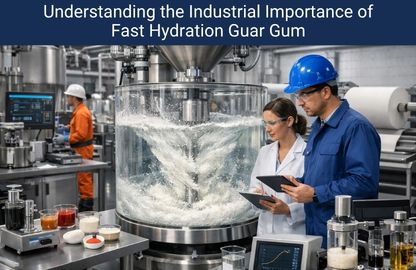
Understanding the Importance of Fast Hydration Guar Gum

Guar gum is derived from the endosperm of guar beans and functions as a natural thickener, stabilizer and gelling agent. What distinguishes premium grades is their hydration speed – how quickly the powder absorbs water and achieves full viscosity. This characteristic, known as Fast Hydration Guar Gum, is a critical performance metric, not merely a marketing term.

In food manufacturing, rapid viscosity development means uniform texture in sauces, dairy products and bakery items without extended mixing times. In pharmaceuticals, it ensures consistent drug release profiles in tablet formulations and oral suspensions. In oilfield stimulation, where hydraulic fracturing demands instant gel formation, any delay translates directly into operational inefficiency and cost overruns.

Industrial paper and textile manufacturers similarly depend on fast hydration to maintain throughput. Standard guar gum grades typically require 60–120 minutes to hydrate fully; fast hydration variants achieve target viscosity in under 5 minutes, sometimes less. This gap has significant downstream consequences on energy consumption, batch cycle time and end-product quality.

Understanding Industrial Importance Fast Hydration Guar Gum

Key Qualities to Look for in a Fast Hydration Guar Gum Supplier

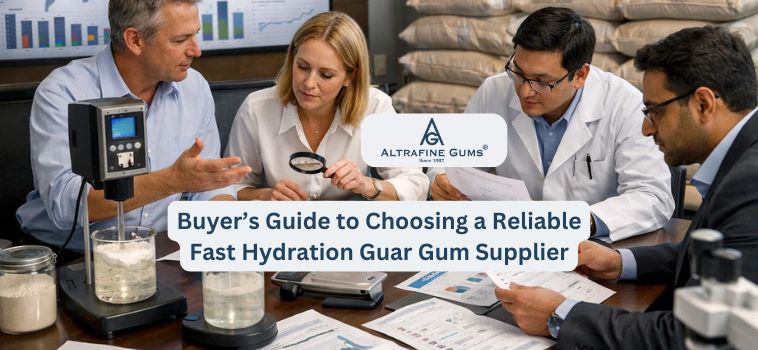
Supplier selection is not simply about price. The right supplier must demonstrate competence across several dimensions:

  • Product Consistency: Viscosity readings, particle size distribution and moisture content should remain within tight tolerances across batches. Request batch-level certificates of analysis (CoAs) before committing to long-term contracts.
  • Manufacturing Infrastructure: Suppliers operating ISO-certified processing units with modern milling and sieving equipment are more likely to deliver reproducible fast hydration characteristics.
  • Traceability: From raw guar split to finish Fast Hydration Guar Gum Powder, a supplier should maintain complete supply chain transparency and be willing to share it.

Reputation within industry networks, customer references from comparable end-use sectors and on-time delivery track records are equally important qualitative indicators.

Want to Discuss?
call Call Us Now!

Fast Hydrating Slurriable Guar: Testing and Certifications to Ensure Quality

Fast Hydrating Slurriable Guar is designed for direct addition into water-based slurries without pre-blending or premixing – a critical feature in drilling fluids and hydraulic fracturing operations. Verifying quality requires both certified documentation and hands-on testing.

Essential Certifications to Verify:

  • ISO 9001:2015 – Quality management systems certification, confirming process control and traceability.
  • API Standards Compliance – For oilfield-grade Fast Hydrating Slurriable Guar Gum, verify adherence to American Petroleum Institute specifications.

Testing Parameters to Request:

  • Brookfield and Fann Viscosity – A key performance benchmark for hydration speed.
  • Residue on Sieve (mesh 200) – Indicates particle uniformity; finer mesh typically correlates with faster hydration.
  • Moisture Content (typically < 10%) – Excess moisture compromises powder flow and shelf life.
  • pH Value – Stability indicator across application environments.

Request third-party lab reports, not just in-house data. Independent verification from accredited laboratories significantly reduces the risk of misrepresentation.

Our Other Product

Guar Gum Powder

Fast Hydration Guar Gum Powder: Custom Sourcing and Bulk Order Options

Procurement flexibility is a competitive differentiator for suppliers. When sourcing Fast Hydration Guar Gum Powder at scale, evaluate suppliers on the following:

Custom Formulation Capabilities:

Not all applications require identical hydration speeds. Some end-users need 3-minute hydration; others require controlled slow-fast profiles for staged gel formation. A capable supplier will offer custom mesh sizes (100 and 200 mesh), blended formulations with additives like borax for cross-linking and tailored viscosity grades.

Packaging Options:

  • Small pack: 25 kg HDPE Paper laminated Bags (standard for lab-scale and small batch operations)
  • Bulk pack: 500 kg to 1 MT jumbo bags (flexible intermediate bulk containers)

Fast Hydrating Slurriable Guar Gum Powder: Comparing Prices and Cost-Effectiveness

Price of Fast Hydrating Slurriable Guar Gum is nuanced. List price per metric ton is only one variable in total cost-of-ownership calculations.

Factors That Affect True Cost:

  • Viscosity Yield: Higher-viscosity powders require less product per batch. A 7,500 cP grade at a slight premium may outperform a cheaper 5,000 cP grade when total product usage per batch is factored in.
  • Consistency: Inconsistent batches generate rework and waste. A reliable supplier with tight quality specifications often justifies a price premium over cheaper alternatives with high variance.
  • Freight and Lead Time: CIF pricing models versus FOB pricing at origin significantly impact landed cost. Consolidate shipments where possible to reduce per-ton freight.

How to Structure a Price Comparison:

Create a weighted scorecard assigning percentage weights to price, quality consistency, lead time, certifications and technical support. This prevents over-indexing on unit cost and reveals the true best-value for your specific application context.

Need More Information?
Email Email Us Today!

Conclusion

Selecting the right Fast Hydration Guar Gum Supplier is a strategic procurement decision that extends well beyond price negotiation. Fast Hydrating Guar Gum directly impacts process efficiency, end-product quality and operational costs across industries. A structured, scorecard-based approach to supplier assessment eliminates guesswork and mitigates supply chain risk. The right partner will not only deliver consistent Fast Hydrating Slurriable Guar Gum Powder but will also provide support, scalable supply options and transparent quality documentation that sustain long-term operational excellence.

Our Other Product

Cassia Tora Powder

FAQs on Fast Hydration Guar Gum

What is the ideal hydration time for Fast Hydration Guar Gum Powder in food applications?

Most fast hydration guar variants achieve target viscosity within 3–5 minutes at room temperature, compared to 60–120 minutes for standard grades.

Is Fast Hydrating Slurriable Guar the same as regular guar gum powder?

No - slurriable grades are specifically milled and surface-treated to prevent lump formation when added directly to water-based slurries.

How do I verify a supplier's Fast Hydration Guar Gum quality without visiting their facility?

Request third-party lab reports, batch CoAs and trial samples tested against your viscosity benchmark before placing a full order.

Can Fast Hydration Guar Gum Powder be used in cold water processing?

Yes, most fast hydration grades are designed to hydrate effectively in water (25°C), making them suitable for ambient-temperature manufacturing lines.

What is the typical shelf life of Fast Hydrating Slurriable Guar Gum Powder?

When stored in cool, dry conditions below 25°C with moisture content under 12%, shelf life is typically 12–24 months from production date.

<< 1 >>


Cassia Gum Market Trends & Forecast (2026–2030

AI Summary

The global Cassia Gum market is on a steady growth trajectory through 2030, driven by expanding applications across food processing, pharmaceuticals, personal care and animal feed industries. Asia-Pacific dominates both production and consumption, while North America and Europe register consistent import demand. Despite its positive outlook, the market must navigate price volatility, raw material supply challenges and evolving regulatory standards. Technological improvements in refining Cassia Tora Powder into high-purity Refined Cassia Gum Powder are expanding the ingredient’s suitability in premium applications, reinforcing long-term market confidence.

Quick, Hassle-Free Quote
call Call Now!

Cassia Gum Market Growth Projections for 2026-2030

The global Cassia Gum market is projected to grow at a CAGR of approximately 5.8–6.5% between 2026 and 2030, building on a historical valuation in 2024. By the close of 2030, the market may anticipated to surpass millions, reflecting deepening demand across multiple end-use industries.

Historically, demand for Cassia Gum Powder has been concentrated in Europe and North America, where food-grade regulations have been well-established for decades. However, the growth story through 2030 will be shaped significantly by Asia-Pacific, particularly India-the world’s largest producer of Cassia Tora Powder-along with China and Southeast Asian nations expanding their food processing and export capacities.

Latin America and the Middle East & Africa are emerging as secondary growth zones, driven by increasing food industrialization and growing awareness of natural hydrocolloid ingredients. Regional trade policies, raw material availability and evolving local food standards will play a decisive role in shaping market shares across these territories.

Factors Driving Global Demand for Cassia Gum

The demand for Cassia Gum is fundamentally tied to the clean-label movement in the food industry. As manufacturers reformulate products to eliminate synthetic additives, Cassia Gum Powder E427 has emerged as a preferred natural thickener, gelling agent and stabilizer-particularly in pet food, dairy analogs and processed meats.

Beyond food, several emerging applications are reinforcing market adoption. In pharmaceuticals, refined grades of Cassia Gum function as binders and controlled-release excipients. In personal care, the ingredient serves as a natural rheology modifier in skin creams and hair conditioners. The feed additive segment, where Cassia Powder improves pellet binding and moisture retention in aquaculture and livestock feeds, is also registering notable uptick.

On the production side, advances in seed processing technology-including improved dehulling, enzymatic refining and particle size reduction-have significantly enhanced the purity and consistency of Refined Cassia Gum Powder. These improvements reduce batch-to-batch variation, a key concern for industrial buyers and widen the ingredient’s compatibility with sensitive applications such as infant nutrition and pharmaceutical formulation.

Regional Cassia Gum Market Analysis: Key Trends in 2026–2030

North America holds a mature but stable share of the Cassia Gum market, with demand largely concentrated in pet food manufacturing and specialty food processing. Regulatory recognition of E427 Cassia Gum Powder in select applications supports consistent import activity, particularly from Indian suppliers.

Europe remains the most regulated and discerning market. The European Food Safety Authority (EFSA) periodically re-evaluates permitted hydrocolloids and Cassia Gum Powder E427’s status as an EU-approved additive (E427) gives it a competitive edge over less-regulated alternatives. Growth here is incremental but sustained.

Cassia Gum Market by Region: Key Trends 2026–2030

Asia-Pacific dominates the supply side and is fast developing as a strong demand center. India may produces roughly 70–75% of the world’s Cassia Tora Powder, with major processing hubs in Gujarat and Rajasthan. Domestic consumption is climbing as Indian food, feed and cosmetic companies increasingly incorporate Cassia Gum into formulations.

Latin America is emerging as a growth hotspot, with Brazil and Mexico leading demand from the meat processing and pet food sectors. The Middle East & Africa, while still nascent, shows promise through expanding processed food markets and import-oriented trade.

Our Other Product

Guar Gum Powder

Emerging Applications of Cassia Gum in Food, Pharmaceuticals and More

Food & Beverage: Cassia Gum’s synergistic interaction with carrageenan and xanthan gum makes it indispensable in pet food gel formation. In human food, its application is growing in dairy desserts, bakery fillings and sauces as a cost of cassia gum-effective stabilizer that qualifies as a natural ingredient.

Pharmaceuticals & Industrial Use: High-purity Refined Cassia Gum Powder is gaining traction as a pharmaceutical excipient for tablet binding and film coating. On the industrial side, it finds use in paper manufacturing, textile sizing and oil drilling fluids, where its thickening and water-retention properties offer functional value at competitive cost.

Personal Care & Cosmetics: As consumers push for botanical-origin formulations, Cassia Gum Powder is finding increasing utility in lotions, shampoos and gels. Its film-forming and moisturizing properties make it a credible natural alternative to polyacrylamides and synthetic polymer thickeners.

Key Players and Competitive Landscape in the Cassia Gum Market

The Cassia Gum market is moderately fragmented, with a handful of large Indian exporters dominating global supply. These companies collectively account for the majority of global Cassia Gum Powder exports, supplying to Europe, North America, Japan and Australia.

Competition is primarily driven by quality consistency, pricing and regulatory compliance documentation. With European buyers requiring rigorous quality certifications, suppliers investing in ISO-certified processing facilities and third-party analytical testing hold a structural advantage.

Product differentiation is emerging around purity grades-standard Cassia Tora Powder versus high-viscosity, food-grade Refined Cassia Gum Powder commands a significant price premium. Companies offering custom particle sizes, customized viscosity profiles and certified organic variants are gaining shelf preference among value-conscious yet quality-driven international buyers.

Challenges and Risks in the Cassia Gum Market Outlook (2026–2030)

Supply Chain Vulnerabilities: Cassia Tora cultivation is concentrated in a narrow geographic belt across India, making the supply chain sensitive to monsoon variability and crop yield fluctuations. A poor harvest season can rapidly affect Cassia Gum Powder price, disrupting supply agreements and buyer budgets.

Regulatory Complexity: While Cassia Gum Powder (E427) enjoys EU approval, its permitted applications remain restricted and companies targeting new use categories must navigate lengthy safety review processes. Regulatory divergence between markets-particularly the US, where the ingredient has limited formal approvals-creates market access barriers.

Price Volatility: The price of cassia gum is inherently variable, influenced by seed procurement costs, processing overheads and freight rates. Buyers seeking long-term supply stability must negotiate indexed pricing mechanisms or secure forward contracts to manage exposure.

Sustainability Pressures: As ESG considerations intensify across supply chains, buyers increasingly scrutinize suppliers’ environmental practices-including water use, waste management and agricultural sourcing ethics. Cassia Gum producers that fail to demonstrate sustainable practices risk losing contracts with major food and personal care brands committed to responsible sourcing goals.

We are Fast in Response
Contact Now!

Conclusion

The Cassia Gum market stands at an inflection point, with growing demand from clean-label food formulation, expanding pharmaceutical applications and a rising natural personal care sector collectively supporting a positive 2026–2030 outlook. While India will continue to anchor global supply, competitive refinement technologies and diversified end-use demand are broadening the ingredient’s commercial footprint. Addressing supply chain concentration risks, navigating regulatory complexity and demonstrating sustainability credentials will be the defining competencies for market participants seeking to capitalize on this trajectory. For both producers and buyers, the strategic priority over the next five years lies in quality differentiation, long-term supply partnerships and proactive engagement with evolving global food safety standards.

Our Other Product

Fast Hydration Guar Gum Powder

FAQs on Cassia Gum

What is Cassia Gum Powder used for?

Cassia Gum Powder (E427) is primarily used as a thickener, gelling agent and stabilizer in pet food, dairy products, personal care formulations and pharmaceutical excipients.

What is the difference between Cassia Tora Powder and Refined Cassia Gum Powder?

Cassia Tora Powder is the raw, minimally processed seed derivative, while Refined Cassia Gum Powder undergoes additional purification steps to achieve higher purity, viscosity consistency and food-grade compliance.

What factors influence the Cassia Gum Powder price?

: Key price drivers include seasonal seed harvests, processing costs, global freight rates, regulatory compliance requirements and demand fluctuations from the food and pet food industries.

Is Cassia Gum (E427) approved in the European Union?

Yes, E427 Cassia Gum Powder is approved in the EU as a food additive for specific categories including processed cheese and pet food, subject to defined maximum usage levels.

Which region dominates Cassia Gum production globally?

India dominates global Cassia Gum production, with Gujarat and Rajasthan being the primary processing hubs, accounting for roughly 70–75% of global supply.

<< 1 >>


Guar Gum Applications in Ceramic & Tile Manufacturing

AI Summary

Guar gum, derived from the guar plant, is a naturally occurring polysaccharide gaining significant traction in ceramic and tile manufacturing due to its multifunctional role as a binder, viscosity modifier and adhesion enhancer. Guar gum powder improves the structural integrity of ceramic bodies during green-stage processing, regulates glaze consistency for uniform application and reduces excess moisture in ceramic pastes to enhance firing efficiency. In tile adhesive formulations, it delivers superior bonding strength while remaining fully biodegradable and non-toxic. Roasted guar korma, a processed derivative, adds further functional value in select industrial applications. Economically, guar powder offers a cost-competitive alternative to synthetic additives, making it a smart choice for manufacturers seeking both performance and sustainability.

Guar Powder as a Binder in Ceramic and Tile Production

In ceramic manufacturing, achieving a consistent and workable body is the foundation of quality output. Guar gum functions as a natural binder that holds raw ceramic particles together during the green (unfired) stage, providing the necessary strength to withstand handling and shaping without cracking or crumbling. Unlike synthetic binders, guar gum powder is water-soluble and integrates seamlessly into the ceramic mix, distributing uniformly at even low concentrations.

The binding action of guar powder derives from its high molecular weight and the ability of its galactomannan chains to form hydrogen bonds with mineral surfaces. This creates a cohesive matrix within the ceramic body, improving both plasticity and green strength. In tile production specifically, this translates into tiles that retain their shape during drying and pre-firing handling – reducing breakage rates and material wastage on the production line. The improved workability also allows manufacturers to achieve finer surface finishes and more precise dimensions.

Need More Information?
Email Email Us Today!

Impact of Guar Gum on Ceramic Glaze Viscosity

Glaze application is a technically demanding step in ceramic production. The glaze must flow smoothly over the ceramic surface, adhere without dripping and dry uniformly to produce a defect-free finish. Guar gum is widely used to regulate the viscosity of ceramic glazes, ensuring they maintain the right consistency throughout dipping, spraying or brushing operations.

When added in controlled quantities, guar gum powder creates a stable, pseudoplastic suspension – meaning the glaze flows easily under the shear stress of application but thickens again when left undisturbed. This prevents settling of heavier glaze particles, maintains batch consistency and ensures even coverage across tile surfaces. The result is fewer surface defects such as pinholes, crawling or uneven colour distribution after firing. Compared to other rheology modifiers, guar gum is cost-efficient and requires minimal adjustment to existing glaze recipes.

Enhancing Tile Adhesion with Guar Gum Powder

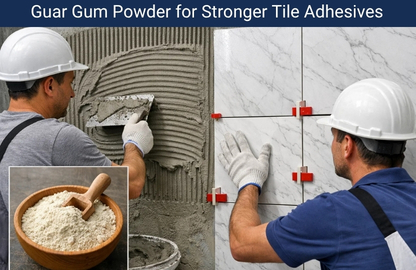
Tile adhesives must deliver reliable bonding across a wide range of substrates – from concrete floors to gypsum walls – while accommodating thermal expansion, moisture fluctuation and structural movement. Guar gum powder plays a critical role in improving the open time and sag resistance of tile adhesive formulations, both of which directly influence on-site installation quality.

Open time refers to the window within which a tile can be pressed into the adhesive and still achieve a proper bond. Guar gum extends this window by slowing moisture loss from the adhesive surface, giving installers more time to position and adjust tiles accurately. Its water-retention properties also ensure that cement-based adhesives hydrate fully, achieving maximum bonding strength. In vertical applications, guar gum’s thickening action prevents tiles from slipping before the adhesive sets. This combination of improved wettability, water retention and sag resistance makes guar gum an essential functional ingredient in high-performance tile adhesive systems.

Guar Gum Powder for Stronger Tile Adhesives

Guar Gum’s Role in Reducing Water Content in Ceramic Paste

Water management in ceramic paste preparation is critical. Too much water weakens the green body and extends drying time; too little makes the paste stiff and difficult to shape. Guar gum helps manufacturers strike the right balance by acting as a water-binding agent – its hydrophilic structure absorbs and holds water molecules within the paste, reducing the total water required while maintaining workable consistency.

By controlling moisture distribution within the ceramic body, guar gum minimises differential drying – a common cause of warping and cracking during the drying phase. A more uniform moisture profile also means more predictable shrinkage during firing, leading to better dimensional accuracy in the finished ceramic product. For industrial tile producers working to tight tolerances, this improvement in process control translates directly into lower rejection rates and more consistent quality across batches. Roasted guar korma, processed to reduce raw odour and fine-tune viscosity, is used in some advanced paste formulations for this purpose.

Our Other Product

Cassia Tora Powder

Environmental Benefits of Using Guar Gum Powder in Ceramic Manufacturing

Sustainability is an increasing priority for manufacturers worldwide and guar gum powder offers a compelling eco-friendly profile. It leaves no toxic residues in the ceramic body after firing and unlike some synthetic polymer binders, it does not release harmful volatile organic compounds (VOCs) during the burn-out stage of the firing cycle.

The cultivation of guar is also relatively resource-efficient – the guar plant is drought-resistant and grows in arid semi-arid regions with minimal agricultural inputs, contributing to lower land use impact compared to petrochemical raw materials. For ceramic and tile manufacturers seeking to reduce their environmental footprint, replace synthetic additives or qualify products for green building certifications, guar gum powder is an attractive substitute. Its natural origin also aligns with increasing regulatory pressure in Europe and other regions to reduce synthetic polymer use in construction materials.

Cost-Effectiveness of Guar Gum in Tile Manufacturing

Beyond performance, guar powder delivers strong economic value in tile manufacturing. India is the world’s largest producer and exporter of guar, making guar gum powder readily available at competitive prices compared to synthetic alternatives such as hydroxyethyl cellulose (HEC) or polyvinyl alcohol (PVA). This supply chain stability gives manufacturers reliable access to the ingredient without exposure to the price volatility that often affects petrochemical-based additives.

Its multifunctional nature also means it can replace two or more additives in a single formulation, further reducing formulation complexity and cost. For smaller tile manufacturers in developing markets, the local availability and affordability of guar powder make it an especially practical choice. Overall, guar gum strikes a rare balance of technical performance, environmental responsibility and economic efficiency that few additives can match.

Speak with an Expert
WhatsApp Call Us Now!

Conclusion

Guar gum has firmly established itself as a versatile and high-value additive in ceramic and tile manufacturing, delivering measurable benefits across binding, glaze control, adhesion, and moisture management. Its natural origin and biodegradability address the industry’s growing environmental responsibilities without compromising on functional performance. The economic advantage is equally compelling – guar powder and its derivative roasted guar korma are available at competitive prices with a stable supply chain, making them accessible to manufacturers of all scales. As the construction and ceramics industry faces mounting pressure to adopt greener, more cost-efficient raw materials, guar gum stands out as a rare solution that satisfies technical, environmental, and commercial requirements simultaneously. It is not merely an additive but a strategic ingredient that supports quality, sustainability, and profitability across the entire tile and ceramic production process.

FAQs

What is the primary function of guar gum in ceramic manufacturing?

Guar gum acts as a natural binder and viscosity modifier, improving the strength and workability of ceramic bodies during shaping and ensuring uniform glaze application before firing.

How does guar gum powder improve tile adhesive performance?

It extends open time, retains moisture for full cement hydration and increases sag resistance - ensuring tiles bond reliably on both horizontal and vertical surfaces during installation.

What is roasted guar korma and how is it used in ceramics?

Roasted guar korma is a heat-processed guar derivative with reduced raw odour and refined viscosity properties, used in select ceramic paste and adhesive applications requiring more controlled rheological behaviour.

Is guar gum environmentally safe for use in ceramic production?

Yes - guar gum is fully biodegradable and plant-derived, releasing no toxic residues or VOCs during firing, making it an eco-friendly alternative to synthetic binders and rheology modifiers.

At what dosage is guar powder typically used in tile manufacturing?

Guar powder is generally effective by weight of the formulation, making it a highly economical additive that delivers significant functional benefits at minimal dosage levels.

<< 1 >>


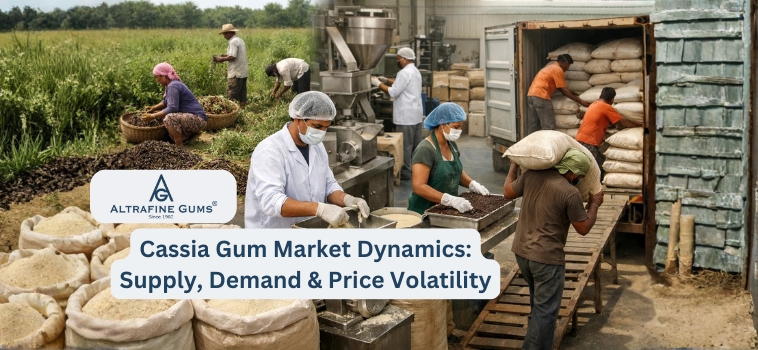
Cassia Gum Market Dynamics: Supply, Demand & Price Volatility

AI Summary:

The pricing of Cassia Gum is shaped by a convergence of supply chain vulnerabilities, raw material availability, processing costs, macroeconomic forces and regulatory frameworks. Sourced primarily from Cassia Tora Powder-producing regions in India and Southeast Asia, the cost of cassia gum is sensitive to monsoon patterns, seed yield fluctuations and rising energy input costs. Global demand from food, pet food and industrial sectors continues to exert upward pressure on Cassia Gum Powder Price, while currency volatility and trade tariffs add further complexity to international procurement. Understanding these dynamics is essential for buyers, formulators and traders operating in the cassia gum market.

Cassia Gum: Global Supply and Demand Dynamics

Cassia Gum is a galactomannan-based hydrocolloid derived from the endosperm of Cassia obtusifolia and Cassia tora seeds, primarily cultivated in India, China and parts of Southeast Asia. Its regulatory status as a food additive – approved under the European Union designation E427 Cassia Gum Powder and increasingly accepted in Asian markets – has driven steady global demand, particularly from the pet food and dairy industries.

However, supply chain disruptions have repeatedly exposed the vulnerability of this niche commodity. Logistical bottlenecks following the pandemic, current ongoing container shipping constraints and port congestion in South Asian export hubs have compressed availability and spiked Cassia Gum Powder Price at short notice. When major buyers from Europe or North America place large forward orders simultaneously, spot market shortages become common, amplifying price volatility.

Seasonal variations further complicate supply. Cassia Tora Powder output peaks post-harvest, which temporarily eases supply pressure. Outside this window, inventory drawdowns at processing facilities become the primary buffer – and when those deplete faster than expected, procurement costs rise sharply. Demand-side growth in the pet food industry, where Cassia Gum Powder E427 functions as a gelling and thickening agent, adds persistent baseline pressure that does not ease between harvests.

Inquire Now for More Information.
Contact Us

Raw Material Availability and Its Impact on Pricing

The cost of cassia gum is directly tied to the availability and quality of cassia seeds – the foundational raw material from which refined grades are produced. India accounts for the majority of global cassia seed supply, with Rajasthan, Madhya Pradesh and Andhra Pradesh as primary cultivation zones. Any disruption to agricultural output in these regions has an immediate upstream effect on Refined Cassia Gum Powder pricing.

Rainfall patterns are the single most influential agronomic variable. Deficient monsoons reduce pod formation and seed weight, yielding smaller, lower-endosperm seeds that produce less extractable gum per tonne of raw input. Conversely, excessive rainfall during the flowering stage leads to crop diseases and yield losses. Both extremes translate into tighter seed supplies and elevated raw material costs that cascade through to final Cassia Gum Powder prices.

Competition for cassia seeds between gum processors and other industries – such as animal feed manufacturers who also utilize Cassia Tora Powder as a feed ingredient – adds another layer of raw material pressure. When feed demand is strong, seed prices can be bid up independently of gum market fundamentals, raising the input cost floor for processors of E427 Cassia Gum Powder. Quality differentiation also plays a role: high-endosperm, premium-grade seeds command a price premium of 20–35% over standard grades, directly influencing the cost structure of Refined Cassia Gum Powder.

Cassia Gum Powder: Manufacturing and Processing Costs

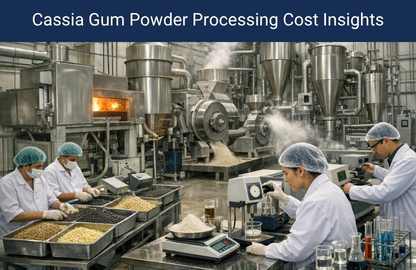
Processing cassia seeds into commercially viable Cassia Gum Powder involves multiple cost-intensive stages: dehusking, splitting, endosperm separation, milling, refining and quality standardization. Each stage contributes to the final Cassia Gum Powder Price and cost pressures at any point affect overall margins and buyer-facing pricing.

Energy costs are a critical variable in this process. The drying, grinding and purification stages are energy-intensive, making processors sensitive to fluctuations in electricity tariffs and diesel prices. In recent years, rising global energy prices have meaningfully increased the per-tonne production cost of Refined Cassia Gum Powder, particularly for facilities running high-throughput operations. Labor costs in producing countries, though historically lower than in Western markets, have also risen with inflation, adding incremental pressure.

The production of food-grade Cassia Gum Powder requires adherence to strict specification standards – including low heavy metal content, controlled microbial counts and precise viscosity profiles. Meeting these standards necessitates investment in laboratory infrastructure, third-party testing and sometimes re-processing of off-spec batches. These quality compliance costs are non-trivial and are embedded in the price differential between food-grade and technical-grade Cassia Powder. Additionally, packaging in moisture-barrier materials and cold-chain logistics for export-grade products add a further cost layer that smaller buyers often underestimate.

Cassia Gum Powder Processing Cost Insight

Our Other Product

Guar Gum Powder

Cassia Powder: Economic Factors and Exchange Rates

Because Cassia Gum is predominantly produced in India and traded globally in US dollars, exchange rate dynamics exert a significant influence on international Cassia Gum Powder Price. When the Indian Rupee depreciates against the USD, Indian exporters temporarily gain a pricing advantage – enabling competitive offers to European and American buyers. Conversely, Rupee appreciation compresses export margins and can reduce the attractiveness of Indian-origin Cassia Powder in dollar-denominated contracts.

Inflationary pressures in key producing countries affect domestic input costs – seeds, labor, energy and packaging – which are priced in local currency. When domestic inflation runs ahead of exchange rate adjustments, the real cost of cassia gum production rises even without any change in the USD spot price. Buyers on long-term fixed-price contracts can find their suppliers requesting renegotiation as input cost inflation erodes processing margins.

Global commodity inflation cycles also affect Cassia Gum indirectly. As competing hydrocolloids – such as guar gum, locust bean gum and tara gum – become more expensive due to their own supply-demand shifts, buyers substitute toward Cassia Gum Powder E427, increasing demand and supporting price increases. This cross-commodity substitution effect means that the cost of cassia gum cannot be analyzed in isolation; it must be contextualized within the broader hydrocolloid and food-ingredient pricing environment.

Let’s Discuss! Request a Call Now!
call Call Now!

Cassia Gum Pricing: Impact of Government Regulations and Tariffs

Regulatory approval is a foundational prerequisite for Cassia Gum Powder to access key markets – and the status of those approvals directly affects both demand and price. The European Union’s approval of Cassia Gum for use in canned pet food (under strict maximum usage levels) opened a significant market, enabling Indian processors to export at premium prices into a regulated, quality-conscious buyer base.

Import tariffs and trade policies in destination markets directly affect the landed cost of Cassia Gum. European Union tariff schedules, US Harmonized Tariff Schedule classifications and country-specific anti-dumping measures can add to the effective cost of cassia gum, depending on origin and product classification. Trade disputes – have periodically created tariff uncertainty, prompting buyers to seek alternative supply origins or build precautionary inventory, both of which influence short-term price behavior.

On the supply side, Indian government export policies, including periodic adjustments to the Minimum Export Price (MEP) for seed-derived commodities and changes to goods and services tax structures, affect the competitiveness of Indian-origin Cassia Tora Powder and downstream gum products. Regulatory changes mandating enhanced food safety certifications – such as FSSC 22000 or FSSAI compliance for export-grade Cassia Gum Powder – increase compliance costs for processors, which are ultimately passed through to buyers. The regulatory environment thus acts as both a market access gatekeeper and a cost multiplier across the cassia gum supply chain.

Conclusion

The pricing of Cassia Gum is the product of interlocking variables spanning agriculture, manufacturing, macroeconomics and regulatory policy. Buyers seeking cost predictability must track seed harvest conditions in South Asia, monitor exchange rate trends between the Rupee and USD and stay ahead of evolving import tariff schedules in their target markets. Producers of Cassia Tora Powder, in turn, face the dual challenge of managing input cost volatility while meeting increasingly stringent food-grade specifications. As global demand for plant-based hydrocolloids grows and regulatory frameworks tighten, the strategic importance of understanding the full cost of cassia gum – from field to formulation – will only increase for procurement teams and market participants alike.

FAQs

What is the primary use of Cassia Gum Powder in the food industry?

Cassia Gum Powder E427 is primarily used as a gelling and thickening agent in canned pet food, dairy products and meat applications due to its strong synergistic gelation with carrageenan.

Why does Cassia Gum Powder Price fluctuate seasonally?

Seasonal price swings occur because cassia seed harvests are concentrated in a narrow post-monsoon window, creating periodic supply tightness and inventory pressure outside the harvest season.

How does Refined Cassia Gum Powder differ from standard grades?

Refined Cassia Gum Powder undergoes additional purification and micronization to meet food-grade viscosity and safety specifications, commanding a premium over technical-grade Cassia Powder.

What role do exchange rates play in the cost of cassia gum for international buyers?

Since cassia gum is priced in USD but produced in Rupee-denominated economies, Indian Rupee fluctuations against the dollar directly affect export competitiveness and landed cost for importers.

Are tariffs a significant factor in the final Cassia Gum Powder Price?

Yes - import tariffs, anti-dumping duties and country-of-origin classifications can add to the cost of E427 Cassia Gum Powder, making regulatory monitoring essential for procurement planning.

<< 1 >>


Cassia Gum Food Beverage Industry

AI Summary

Cassia Gum in Europe, has quietly become a versatile functional ingredient across Spain’s dynamic food and beverage landscape. From thickening traditional soups like Gazpacho in Seville and Madrid to stabilizing dairy products in Catalonia and Galicia, Cassia Gum Powder integrates seamlessly into both heritage and modern formulations. Its role extends to confectionery staples like turrón in Alicante, smoothie manufacturing in Barcelona, gluten-free innovations citywide and processed meats in the Basque Country and Salamanca. As Spanish food manufacturers increasingly prioritize clean-label and plant-based solutions, Refined Cassia Gum Powder valued for its neutral taste, heat stability and functional compatibility with other hydrocolloids-continues to gain traction as a preferred natural additive that satisfies both regulatory standards and evolving consumer demands.

Cassia Gum as a Natural Thickening Agent in Spanish Sauces and Soups

Spain’s culinary identity rests heavily on its iconic sauces and soups and Cassia Gum has found a quiet but important role in their commercial production. In large-scale food manufacturing hubs across Seville and Madrid, producers of bottled Gazpacho-the chilled tomato-based soup beloved across Andalusia-rely on Cassia Gum Powder to maintain a consistent, smooth viscosity without compromising the dish’s fresh, clean flavor profile.

Traditional Spanish sauces such as sofrito, romesco and salsa brava are increasingly produced at industrial scale for retail. Cassia Tora Powder serves as a natural thickener that prevents separation, retains texture during pasteurization and reduces the need for synthetic stabilizers. The hydrocolloid properties of E427 Cassia Gum Powder make it particularly effective in high-temperature processing environments where other gums may lose functional integrity. Its compatibility with starch-based systems gives formulators flexibility in achieving desired mouthfeel without altering the regional character of these prod  ucts.

Let’s Discuss! Request a Call Now!
call Call Now!

Impact of Cassia Powder on Traditional Spanish Confectionery and Sweets

Alicante and Valencia are the spiritual heartlands of Spain’s confectionery traditions, most famously turrón-a nougat-style sweet made with honey, almonds and egg whites. As artisan recipes move into factory production lines, ingredient consistency becomes critical. Cassia Powder plays a functional role here as a binding and texturizing agent, helping manufacturers achieve uniform chewiness and structural integrity in both hard and soft turrón variants.

In churro production, where dough consistency directly affects frying performance and final texture, Refined Cassia Gum Powder acts as a dough conditioner that stabilizes moisture distribution. Confectioners in Valencia have also begun incorporating Cassia Gum Powder E427 into marzipan bases and caramel fillings, where it prevents crystallization and controls sugar migration during storage. The ingredient’s neutral taste profile ensures that delicate flavors-almond, honey, citrus zest-are not masked, making it a natural fit for premium regional sweets targeting both domestic and export markets.

Cassia Gum in Spain’s Dairy Industry: Applications in Yogurts and Creams

Spain’s dairy sector is anchored by two major production regions: Catalonia in the northeast and Galicia in the northwest. Both are known for its rich dairy traditions-from creamy yogur natural to thick nata (cream)-and both have increasingly embraced Cassia Gum as a stabilizing ingredient in commercial dairy formulations.

In set-style and stirred yogurts, Cassia Powder improves gel firmness and prevents syneresis-the undesirable separation of whey from the curd-during refrigerated storage. Galician dairy cooperatives producing nata for retail use Refined Cassia Gum Powder to achieve consistent viscosity and a smooth pourability that meets consumer expectations. When combined with carrageenan or locust bean gum, Cassia Tora Powder demonstrates strong synergistic thickening, allowing manufacturers to reduce total hydrocolloid use while maintaining texture. This functional efficiency, combined with its status as a natural additive under EU food law, makes attractive to Catalan dairy brands positioning themselves in the clean-label segment.

Cassia Gum: Revolutionizing Spain's Dairy Industry in Yogurts and Creams

Cassia Powder’s Role in the Spanish Beverage Industry: From Smoothies to Juices

Barcelona and Valencia have established themselves as Spain’s leading beverage innovation corridors, home to a growing number of cold-pressed juice brands, smoothie manufacturers and functional drink producers. In this segment, ingredient stability is everything-consumers expect no sedimentation, no separation and a consistent pour experience from bottle to glass.

Cassia Gum Powder functions as an effective stabilizer and emulsifier in high-pulp fruit juices and blended smoothies, preventing particle settling without requiring synthetic additives or excessive shaking instructions on labels. Cassia Gum is particularly valued in chilled beverages because it maintains its viscosity-building properties at low temperatures, unlike some competing hydrocolloids. Beverage manufacturers in Barcelona have also begun using Cassia Tora Powder in plant-based protein shakes and oat-based drinks, where it prevents clumping and improves mouthfeel. Its regulatory clearance under EU food standards and compatibility with clean-label positioning continue to drive adoption across Spain’s expanding functional beverage market.

Our Other Product

Guar Gum Powder
Powder in Spanish Meat and Process

Cassia Gum for Gluten-Free and Vegan Products in Spain’s Food Sector

The demand for gluten-free and plant-based food products has surged across Spain, particularly in urban centers like Barcelona and Madrid, where health-conscious consumer segments are growing rapidly. For manufacturers reformulating traditional products without gluten, eggs or dairy, the challenge lies in replacing the structural and textural functions these ingredients normally provide-and Cassia Gum offers a practical solution.

In gluten-free bread and pasta, Refined Cassia Gum Powder acts as a binder that mimics the elasticity of gluten, improving dough cohesion, reducing crumbliness and extending shelf life. In vegan cheese and plant-based yogurt alternatives, contributes to the firm, sliceable texture that consumers expect from conventional dairy products. Spanish food startups operating in Barcelona’s food-tech ecosystem are increasingly specifying Cassia Tora Powder in their formulation sheets for its dual functionality-binding and moisture retention-which reduces the need for multiple additives. As certification requirements for vegan and gluten-free labeling tighten across EU markets, the clean-label status of E427 Cassia Gum Powder gives formulators a compliant, effective ingredient option.

Cassia Gum Powder in Spanish Meat and Processed Food Products

Spain’s reputation for charcuterie and cured meats is world-renowned, with regions like Salamanca-home to Iberian ham-and the Basque Country-celebrated for its txistorra and morcilla-representing the highest traditions of Spanish meat craft. As these products scale for mass-market distribution, manufacturers face formulation challenges around texture consistency, moisture retention and binding in processed variants.

Cassia Powder is used in emulsified sausage products, meat pâtés and ready-to-eat processed meals to improve water-holding capacity, reduce cooking loss and enhance sliceability. In the Basque Country’s growing ready-meal sector, Refined Cassia Gum Powder is incorporated into sauce-coated meat products to maintain sauce adherence and prevent liquid separation during reheating. Salamanca-based processors producing canned or vacuum-packed meat preparations use Cassia Tora Powder as part of multi-hydrocolloid blends to achieve stable gels that hold under varied temperature conditions. Its approval as Cassia Gum Powder E427 under EU Regulation ensures straightforward regulatory compliance across all Spanish and European market channels.

Inquire Now for More Information.
Contact Us

Conclusion

Spain’s food and beverage industry is undergoing a steady shift toward cleaner, more functional ingredients and Cassia Gum sits at the center of that transition. From stabilizing Gazpacho in Seville to binding gluten-free doughs in Barcelona, from firming yogurts in Galician dairy cooperatives to improving texture in Basque Country processed meats, Cassia Gum Powder proves its versatility across remarkably diverse applications. The ingredient’s regulatory standing as E427 Cassia Gum Powder under EU food law, combined with its plant-based origin and compatibility with clean-label positioning, gives Spanish manufacturers a compliant and commercially viable alternative to synthetic additives. As demand for vegan, gluten-free and minimally processed products continues to grow in urban markets like Madrid and Barcelona, Refined Cassia Gum Powder and Cassia Tora Powder are well-positioned to deepen their footprint across every tier of Spain’s food sector – from artisan confectionery in Valencia to large-scale beverage manufacturing along the Mediterranean coast.

FAQs on Cassia Gum in Spain

What is Cassia Gum and why is it used in Spanish food products?

Cassia Gum is a natural hydrocolloid derived from Cassia tora seeds, used as a thickener, stabilizer and binder in a wide range of Spanish food and beverage applications.

Is Cassia Gum Powder E427 approved for use in European food products?

Yes, E427 Cassia Gum Powder is approved under EU Regulation and is legally permitted in specific food categories across all EU member states, including Spain.

How does Refined Cassia Gum Powder differ from standard Cassia Gum?

Refined Cassia Gum Powder undergoes additional processing to reduce impurities and achieve a more consistent particle size, making it suitable for high-purity food-grade applications.

Can Cassia Tora Powder be used in vegan and gluten-free certified products?

Yes, Cassia Tora Powder is plant-derived, free from animal ingredients and gluten-free, making it compatible with both vegan and gluten-free product certifications.

Which food segments in Spain show the highest growth in Cassia Gum adoption?

The fastest-growing segments include gluten-free bakery, plant-based dairy alternatives, functional beverages and ready-to-eat processed meat products, particularly in Barcelona and Madrid.

<< 1 >>


Guar Gum Driving Innovation Sustainability Indonesia Textile Industry

AI Summary: The Role of Guar Gum in Indonesia’s Textile Industry

Guar gum have become essential across Indonesia’s major textile cities, serving functions from yarn sizing and dye thickening to sustainable wet processing. Jakarta and Surabaya rely on it for fabric strength and colour uniformity, while Bandung leads in digital print paste innovation using guar-based formulations. Semarang’s mills are replacing synthetic thickeners with guar powder to meet compliance standards and Yogyakarta’s batik producers use it to maintain precision in traditional and modern dyeing alike. Medan is emerging as a high-potential market, leveraging port access to source roasted guar korma competitively and expand into technical textile applications. Across the country, guar gum’s natural origin, functional versatility and biodegradable profile make it a cornerstone ingredient in Indonesia’s push toward quality-driven and environmentally responsible textile manufacturing.

Guar Gum’s Contribution to Textile Manufacturing in Jakarta

Jakarta, as Indonesia’s commercial capital, houses one of the country’s most dynamic textile manufacturing sectors. Across its industrial zones, guar gum has become a foundational ingredient in dyeing and finishing operations. Derived from the guar plant’s endosperm, this natural polysaccharide functions as a sizing agent that coats yarn fibres, reducing breakage during weaving. In reactive dyeing – a process widely used in Jakarta’s mills for cotton and blended fabrics – guar gum powder acts as a thickener that controls dye migration, ensuring sharp colour definition and uniform penetration. The result is a finished fabric with vibrant, consistent hues and a smoother hand feel, both of which meet the high standards demanded by Jakarta’s export-oriented manufacturers.

Get Your Tailored Quote in Minutes
WhatsApp Click Here!

Impact of Guar Gum Powder in the Textile Production of Surabaya

Surabaya’s textile factories, concentrated in the Rungkut Industrial Estate, produce large volumes of woven and knitted fabrics for both domestic and international markets. The adoption of guar gum powder in these facilities has directly improved fabric tensile strength and surface texture. When applied as a warp sizing agent, it binds fibres together, reducing yarn hairiness and minimising loom downtime caused by thread breakage. Beyond structural improvement, guar gum enhances the stiffness and body of finished cloth, giving it the firmness buyers expect in formal and workwear segments. Its biodegradable profile also reduces wastewater treatment loads, a practical advantage for Surabaya’s factories operating under tightening environmental compliance requirements.

Guar Gum in Textile Applications: A Key Ingredient in Bandung’s Textile Innovations

Bandung has long been Indonesia’s creative textile hub, home to batik workshops, fashion labels and technical fabric producers. Here, the use of guar gum in textile applications has evolved beyond conventional sizing into innovative formulations. Designers and technologists in Bandung are experimenting with guar gum blends that impart specific surface effects – from a matte finish on premium cotton to controlled sheen on synthetic blends. Small-batch artisan producers value its compatibility with natural dyes, which supports Bandung’s growing eco-fashion movement. Meanwhile, larger mills use it in digital textile printing as a print paste thickener, achieving fine-detail patterns with minimal colour bleed – a quality requirement that has elevated Bandung’s reputation in high-end fabric exports.

The Role of Guar Powder: Sustainable Textile Practices in Semarang

Semarang’s textile sector has increasingly aligned itself with sustainability targets, driven by international buyer demands and Indonesia’s national green industry agenda. Guar powder plays a central role in this shift. Unlike synthetic thickeners derived from petrochemicals, guar powder is plant-based, fully biodegradable and desizes cleanly from fabric with minimal water usage – a significant advantage given the water-intensive nature of textile wet processing. Several Semarang factories have replaced carboxymethyl cellulose (CMC) and polyvinyl alcohol (PVA) with guar powder in warp sizing applications, reducing their chemical oxygen demand (COD) in effluent by a measurable margin. This transition supports ISO 14001 certification goals and appeals to European buyers who conduct environmental audits before placing orders.

Guar Powder: Driving Sustainable Textile Practices in Semarang

Our Other Product

Cassia Gum Powder

Guar Gum Powder as a Natural Additive in Yogyakarta’s Textile Dyeing Process

Yogyakarta occupies a singular position in Indonesian textiles – a city where centuries-old batik traditions coexist with contemporary fabric production. For batik makers, the resist-dyeing process demands precise control over dye flow and guar gum powder delivers exactly that. Applied as a paste to define dye boundaries, it prevents feathering in intricate motifs, preserving the sharpness of traditional Javanese patterns. Modern commercial dyehouses in Yogyakarta have adopted it in vat and reactive dye systems for its ability to deliver level dyeing on cellulosic fibres. Roasted guar korma, a derivative obtained by roasting split guar seeds, is also gaining attention in Yogyakarta’s smaller processing units as a cost-effective raw material for producing customised gum grades suited to specific viscosity requirements in thickened dye pastes.

The Future of Guar Gum in Indonesia’s Textile Industry: Potential in Medan

Medan, North Sumatra’s industrial capital, is an emerging player in Indonesia’s textile landscape. With its proximity to plantation-based raw materials and a growing manufacturing base, Medan is well-positioned to increase guar gum adoption. Current use is concentrated in yarn sizing for locally woven sarongs and cotton fabrics, but expansion into digital printing pastes and technical textiles is expected as the city’s industrial capacity grows. Supply chain advantages also work in Medan’s favour – direct sourcing of roasted guar korma from international traders via Belawan Port reduces input costs compared to factories in Java. As Indonesian textile manufacturers face pressure to lower carbon footprints while maintaining quality, guar gum’s natural origin, functional versatility and competitive pricing make it an ingredient with considerable long-term relevance across all of the country’s major textile centres.

Need More Information?
Email Email Us Today!

Conclusion

Guar gum has firmly established itself as a multifunctional and indispensable ingredient across Indonesia’s textile industry, bridging the gap between performance demands and sustainability goals. From Jakarta’s export-driven mills to Yogyakarta’s artisan batik workshops, its applications in sizing, dyeing and finishing consistently deliver measurable improvements in fabric quality and production efficiency. The growing shift from synthetic thickeners to guar gum powder reflects a broader industry commitment to reducing environmental impact without compromising output standards. With Medan poised for expansion and cities like Bandung and Semarang already pushing boundaries in innovation and green practices, the trajectory for guar gum adoption across Indonesia is clearly upward. As global buyers increasingly mandate eco-conscious sourcing, roasted guar korma and its refined derivatives offer Indonesian manufacturers a natural, cost-effective and future-ready solution to remain competitive on the world stage.

FAQs on Guar Gum Powder

What is the primary function of guar gum in textile manufacturing?

Guar gum functions mainly as a sizing and thickening agent, improving yarn strength during weaving and ensuring uniform dye distribution in printing and dyeing processes.

How does guar gum powder differ from synthetic thickeners used in the textile industry?

Guar gum powder is plant-derived and biodegradable, making it environmentally preferable to petrochemical-based synthetic thickeners, which generate higher chemical loads in textile effluent.

What is roasted guar korma and how is it used in textiles?

Roasted guar korma is a processed guar seed derivative used as a raw material to produce customised gum grades with specific viscosity profiles for dye paste and sizing applications.

Why is guar powder preferred for sustainable textile practices?

Guar powder reduces COD in wastewater, desizes easily with less water and is biodegradable - all of which help textile factories meet environmental compliance and green certification standards.

Which Indonesian cities show the most potential for expanded guar gum adoption?

Medan shows strong growth potential due to its port access for guar imports and expanding textile base, while Bandung and Yogyakarta lead in innovative, artisan and eco-focused guar gum applications.

<< 1 >>


Fast Hydration Guar Gum in Petrochemical Fracturing Fluids

In the evolving world of hydraulic fracturing or “fracking,” the need for efficient, cost-effective and environmentally friendly solutions has led to the increased use of guar gum powder. Guar gum, a natural polysaccharide derived from the seeds of the guar plant, plays a crucial role in enhancing the performance of fracturing fluids. Its ability to improve fluid viscosity, stabilize fluids under extreme conditions and contribute to more sustainable water management has made it a staple in the petrochemical industry. This article explores the key benefits of fast hydrating guar gum powder in fracking fluids and how it is transforming oil and gas extraction processes.

Get Your Tailored Quote in Minutes
WhatsApp Click Here!

Fast Hydration Guar Gum Powder in Hydraulic Fracturing: Enhancing Fluid Viscosity for Better Control

Hydraulic fracturing requires fluids that can effectively transport proppants deep into the wellbore. Proppants, such as sand or ceramic particles, are necessary to keep fractures open after they have been created by the high-pressure fluid. To achieve this, the fluid must have high viscosity to carry the proppants efficiently through the fractures.

Guar gum powder, when mixed with water, forms a gel-like consistency that increases the viscosity of the fracturing fluid. This ensures that the proppants are carried deep into the rock formations, maximizing the potential for oil and gas extraction. Without the viscosity-enhancing properties of fast hydrating guar gum, it would be difficult to achieve the necessary flow rates and depths to optimize hydrocarbon recovery.

The use of guar gum enables precise control over the fluid’s flow and viscosity, which is vital for successfully completing fracking operations. By ensuring that the fluid’s consistency remains stable under pressure, guar gum helps maintain optimal flow throughout the entire fracking process.

The Role of Fast Hydration Guar Gum in Fracturing Fluids: Boosting Efficiency in Oil & Gas Extraction

One of the primary reasons guar gum is used in hydraulic fracturing is its ability to enhance the overall efficiency of the extraction process. Hydraulic fracturing relies on the injection of high-pressure fluids into underground formations to break up rock and release trapped hydrocarbons.

Guar gum’s ability to modify the fluid properties, such as viscosity and gel strength, allows for more efficient rock fracturing. When injected into the well, the guar gum-laden fluid creates a greater force, which aids in breaking apart rock formations. The enhanced gel strength ensures that the fracturing fluid can maintain pressure, even in deeper and more complex formations, making it easier to access previously unreachable hydrocarbon reserves.

Furthermore, the use of fast hydration guar gum helps reduce friction and pressure drop in the fluid flow, leading to better overall energy efficiency. This means that more oil and gas can be extracted per unit of energy, improving the economic viability of oil and gas extraction projects.

Fast Hydration Guar Gum Powder for Oil Gas Fracturing

Our Other Product

Guar Gum Powder

Fast Hydrating Slurriable Guar: A Natural and Sustainable Option for Fracking Fluids

In an era where environmental sustainability is a growing concern, fast hydration guar gum powder offers an eco-friendly alternative to synthetic chemicals traditionally used in hydraulic fracturing fluids. As a biodegradable natural product, guar gum is less harmful to the environment compared to other chemicals that may persist in the ecosystem for extended periods.

While synthetic alternatives can contribute to soil and water contamination, guar gum breaks down naturally, reducing the environmental impact of fracking operations. This is particularly important in sensitive areas where the preservation of water sources and soil health is a priority.

Additionally, as a renewable resource, fast hydrating slurriable guar is considered a more sustainable option for the oil and gas industry. Its natural availability and lower environmental footprint make it a valuable component in reducing the industry’s reliance on more harmful synthetic chemicals.

Fast Hydration Guar Gum Powder: Improving Fracturing Fluid Stability

Hydraulic fracturing involves extreme conditions of high pressure and temperature, which can destabilize fracturing fluids, leading to ineffective operations. Guar gum powder helps to stabilize fracturing fluids in such harsh conditions, ensuring they maintain their desired properties throughout the fracking process.

The gelling properties of guar gum are particularly advantageous because they help prevent the breakdown of the fluid at high temperatures, maintaining the fluid’s ability to carry proppants and break rock formations. The stability of guar gum-enhanced fluids is critical in ensuring that the fracking operation is efficient and that the fluid does not lose its effectiveness midway through the process.

Moreover, guar gum helps prevent the “settling” of proppants by maintaining a uniform consistency, ensuring that the proppants remain suspended and distributed evenly. This stability is key to the success of a hydraulic fracturing job, especially in deep and high-pressure wells.

Guar Gum Powder’s Impact on Water Management in Hydraulic Fracturing

Water usage in hydraulic fracturing is a significant concern, especially in regions where water resources are scarce. Guar gum powder plays an essential role in improving water management by enabling the use of lower volumes of water for fracking.

The thickening properties of guar gum mean that less water is needed to achieve the desired fluid viscosity. This reduces the overall water footprint of the hydraulic fracturing process. Additionally, guar gum helps to enhance the effectiveness of the water used by ensuring that it can transport proppants efficiently, even in smaller quantities.

By improving the water efficiency of the process, guar gum powder helps mitigate the environmental concerns associated with excessive water consumption in fracking operations. This makes it a valuable tool for ensuring the sustainability of hydraulic fracturing in water-stressed areas.

Fast Hydration Guar Gum in Hydraulic Fracturing Fluids

In the oil and gas industry, cost efficiency is a primary concern. Guar gum powder is a relatively low-cost option compared to synthetic alternatives used in hydraulic fracturing fluids. The natural availability of guar gum, coupled with its cost-effective production, makes it a more affordable option for companies looking to optimize their fracking operations.

Beyond the cost of the guar gum itself, its use in fracking fluids can also reduce operational expenses. The improved efficiency in transporting proppants, reducing friction and enhancing fluid stability can lead to fewer operational interruptions and a more streamlined fracking process. This translates to cost savings in terms of labor, equipment wear and energy consumption.

Moreover, the environmental benefits of guar gum may help companies avoid fines and regulatory costs associated with the use of harmful chemicals in fracking fluids. The lower environmental impact of guar gum enhances the long-term sustainability of the operations and minimizes the risk of environmental penalties.

Need More Information?
WhatsApp Email Us Today!

Conclusion

Guar gum powder has proven to be a crucial ingredient in the hydraulic fracturing process. Its ability to enhance fluid viscosity, improve rock fracturing efficiency, stabilize fluids under extreme conditions and reduce water usage makes it an invaluable resource for the oil and gas industry. Moreover, as a natural and biodegradable option, guar gum offers a more sustainable and cost-effective solution for the growing demands of oil and gas extraction.

As the industry continues to focus on improving both operational efficiency and environmental sustainability, guar gum’s role in hydraulic fracturing will likely expand. Its diverse benefits – ranging from better proppant transport to reduced environmental impact – make it a key component in the future of oil and gas extraction.

FAQs About Fast Hydration Guar Gum Powder

What is the role of guar gum powder in hydraulic fracturing?

Guar gum powder increases fluid viscosity, helping to carry proppants deep into rock formations for efficient oil and gas extraction.

How does guar gum powder contribute to water management in fracking?

Guar gum reduces the amount of water needed by thickening the fracturing fluid, leading to more efficient water usage.

Is guar gum environmentally friendly?

Yes, guar gum is biodegradable and has a lower environmental impact compared to synthetic alternatives used in fracking fluids.

What are the cost benefits of using guar gum in hydraulic fracturing?

Guar gum is more cost-effective than synthetic alternatives, improving both operational efficiency and reducing overall costs.

How does guar gum powder improve fracturing fluid stability?

Guar gum stabilizes fracturing fluids under high pressure and temperature, ensuring they remain effective throughout the fracking process.

<< 1 >>